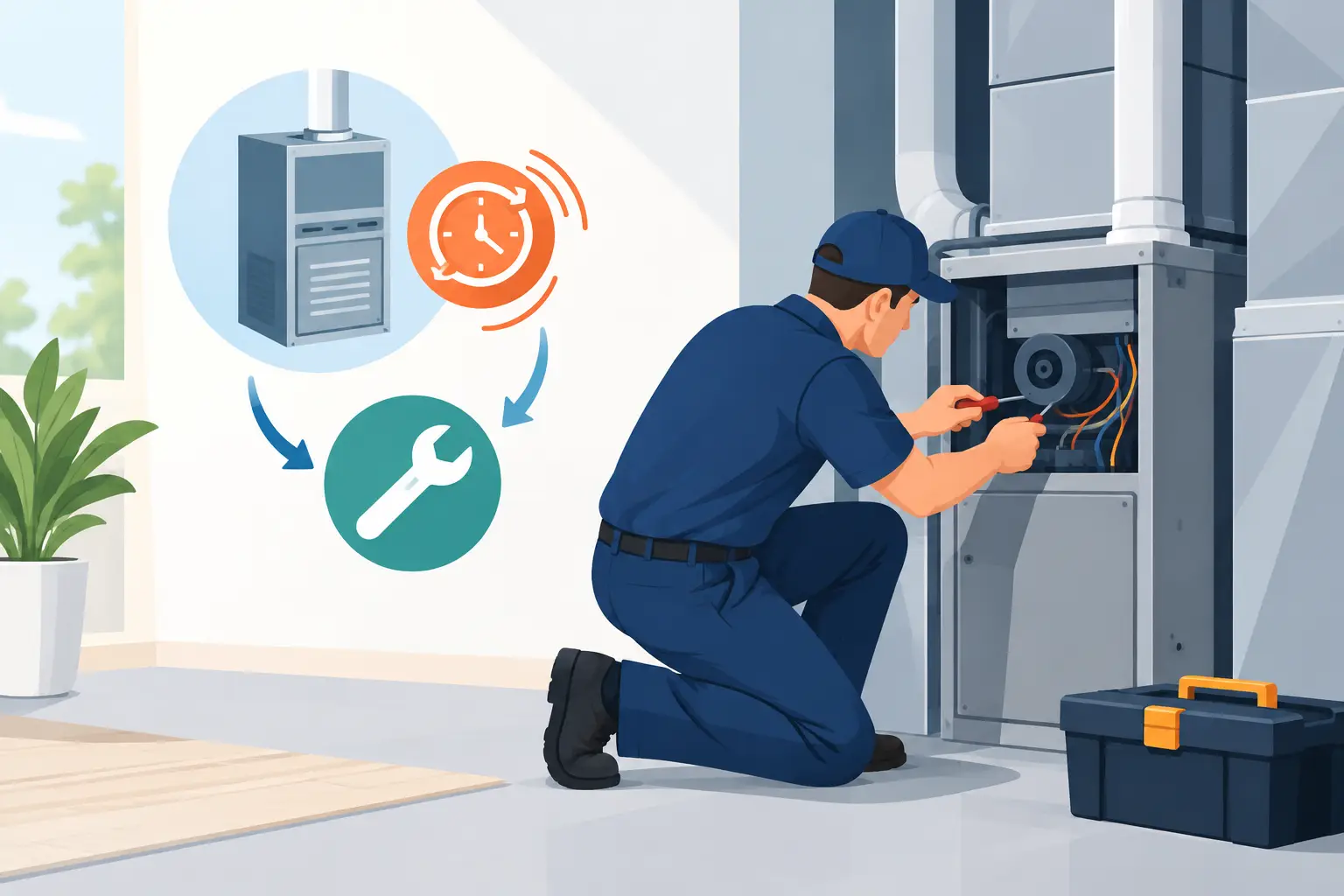
Your furnace starts, runs for a few minutes, shuts off, then starts again before your home feels warm. That pattern is called furnace short cycling, and it is more than an annoying interruption. Repeated short run times can raise energy costs, put unnecessary stress on expensive parts, and leave your household uncomfortable when you need reliable heat most.
A properly operating furnace completes a heating cycle, then stays off until the thermostat calls for heat again. The exact runtime varies with outdoor temperature, insulation, equipment size, and thermostat settings. But if the furnace shuts down after only two to five minutes and repeats the pattern often, it deserves attention.
What furnace short cycling can mean
A furnace has built-in safety controls designed to stop operation when something is wrong. In some cases, short cycling is the system protecting itself from overheating, poor airflow, ignition trouble, or a venting problem. Turning the furnace off and on repeatedly will not correct the underlying issue. It can make it worse.
The problem may also be relatively simple, such as a clogged air filter or thermostat placed too close to a heat source. That is why a careful diagnosis matters. Replacing parts without identifying the actual cause can waste money and still leave you with an unreliable system.
If your furnace is producing a burning smell, making banging or screeching noises, leaking water, or repeatedly tripping a breaker, stop trying to restart it. Turn the system off and arrange professional service. If you smell gas, leave the home, avoid switches or flames, and contact your gas utility or emergency services from a safe location.
Common causes of furnace short cycling
A dirty filter or blocked airflow
Restricted airflow is one of the most common reasons a furnace overheats and shuts down early. A loaded filter limits the air moving across the heat exchanger. Heat builds inside the unit, and the high-limit safety switch turns the burners off. Once the furnace cools, it may start again and repeat the cycle.
Check the filter first, especially during periods of heavy use. A disposable filter that looks gray, packed with dust, or visibly clogged should be replaced with the correct size and type. Also make sure supply registers and return vents are open and not blocked by furniture, rugs, or storage. Do not install a more restrictive filter than your system can handle just because it sounds more effective. The wrong filter can create its own airflow problem.
Thermostat placement or settings
Your thermostat needs an accurate reading of the home’s average temperature. If it is near a sunny window, kitchen appliances, a fireplace, a supply vent, or another heat source, it may sense warmth too quickly and shut the furnace down before other rooms are comfortable.
Low batteries, loose wiring, incorrect programming, or a failing thermostat can also create erratic calls for heat. Before assuming the furnace itself has failed, confirm that the thermostat is set to Heat, the target temperature is several degrees above the room temperature, and the batteries are fresh if your model uses them.
An overheating furnace
Poor airflow is not the only cause of overheating. A malfunctioning blower motor, weak capacitor, dirty evaporator coil in a shared HVAC system, damaged blower wheel, or control problem can keep the furnace from moving enough air. The high-limit switch may be doing exactly what it is supposed to do by shutting the burners off.
This is not a repair to guess at. Continuing to run an overheating furnace can damage the heat exchanger and other components. A trained technician can test airflow, inspect the blower assembly, and determine whether the safety control is responding to a real temperature problem or has failed itself.
Flame sensor or ignition problems
Modern gas furnaces confirm that a burner flame is present before allowing the system to continue operating. A dirty flame sensor may fail to detect the flame even when ignition occurs. The furnace may light briefly, shut down, and try again.
Ignition issues can have several causes, including a worn igniter, dirty burners, a gas supply issue, or a faulty control board. Because gas-fired equipment involves combustion and safety controls, this is a situation for qualified HVAC service rather than a do-it-yourself repair.
Exhaust or intake vent blockage
High-efficiency furnaces often use exterior PVC pipes for combustion air intake and exhaust. Leaves, nests, debris, snow in colder climates, or damage to the vent pipes can interfere with safe operation. The pressure switch may prevent the furnace from staying on if it cannot verify proper venting.
From outside, you can visually check that the vent openings are clear and undamaged. Do not disconnect vent pipes, bypass switches, or insert tools deeply into the openings. Proper venting is essential to safe furnace operation.
An oversized furnace
A furnace that is too large for the home can heat the thermostat area very quickly and shut off before delivering even heat throughout the house. This often becomes noticeable after a replacement installation, renovation, or thermostat relocation.
Equipment size is only one part of the picture. Ductwork, insulation, window performance, airflow balancing, and zoning all affect comfort. An oversized furnace is not always the answer, but a professional load calculation and system evaluation can identify whether sizing is contributing to frequent cycling.
Safe checks to make before scheduling service
A few basic checks can help rule out simple issues without putting you at risk. Replace a dirty filter, make sure vents are open, check thermostat settings and batteries, and look for obvious blockage around exterior intake and exhaust openings. Then observe the furnace through one complete attempt to heat the home.
Write down what happens. Does the blower start? Do you hear ignition? Does the system shut down after a specific number of minutes? Is there an error code light visible through the furnace panel? These details can help a technician diagnose the issue efficiently.
Do not repeatedly reset the furnace, remove access panels while it is operating, clean gas components, or tape down a safety switch. A safety shutdown is a warning, not an inconvenience to override.
When it is time to call for furnace repair
Call for service if a clean filter and correct thermostat setting do not stop the cycling, or if the furnace has a recurring short-cycle pattern. Service is especially urgent when the unit blows cool air, makes unusual noises, emits odors, trips electrical protection, or leaves rooms consistently cold.
For homeowners and property managers in Mountain View and nearby communities, prompt diagnosis helps protect both comfort and the equipment itself. A technician should inspect the complete heating sequence, not simply replace the first part that appears suspicious. That means checking airflow, temperature rise, safety switches, ignition, venting, electrical connections, and thermostat operation before recommending a repair.
Your Appliance Repair provides clear explanations before work begins. You should know what is causing the issue, what repair is recommended, and what it will cost before approving any work. No hidden charges and no repairs without your prior approval make a stressful heating problem easier to manage.
Preventing repeated cycling problems
Some causes cannot be prevented entirely, but routine care reduces the chance of an unexpected breakdown. Change filters on a schedule that fits your household, keep vents and returns clear, and schedule seasonal heating maintenance before the coldest part of the year. During maintenance, a technician can identify weak ignition components, deteriorating electrical parts, airflow concerns, and venting issues before they turn into a no-heat call.
Pay attention to changes in how your furnace sounds and heats. A system that once ran steadily but now starts and stops every few minutes is giving you useful information. Acting early is usually easier on your budget than waiting for a complete failure on a cold night.
A furnace should provide steady, safe heat without demanding your attention every few minutes. If short cycling continues after the simple checks, let a qualified technician find the reason and restore the reliable comfort your home depends on.