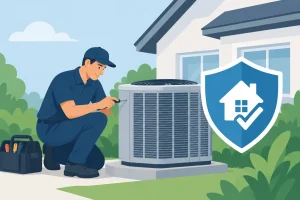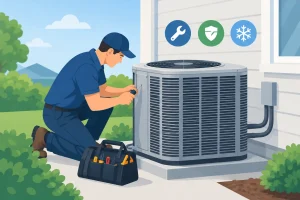
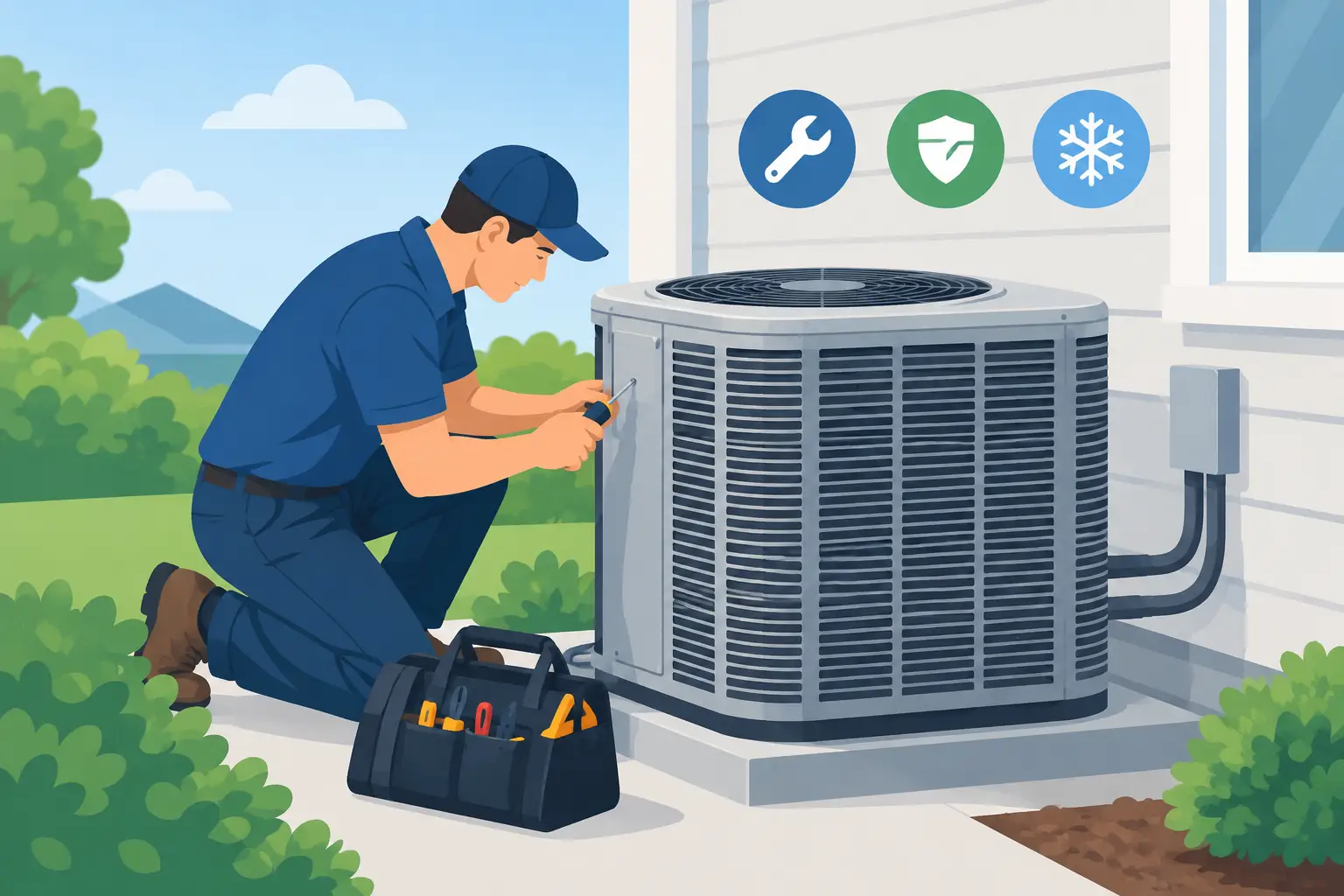
A central air failure rarely happens at a convenient time. One room starts feeling warm, the thermostat says “cool,” and the outdoor unit may be running without making the house any more comfortable. This central air repair guide helps you separate safe homeowner checks from problems that need a qualified HVAC technician – before a small warning sign turns into a bigger repair.
Start with the simplest possibilities, protect the equipment from further damage, and avoid opening electrical panels or refrigerant lines. Air conditioning systems combine high voltage, moving parts, pressurized refrigerant, and moisture. A careful diagnosis matters more than a quick guess.
Central Air Repair Guide: Start With Safe Checks
Before assuming the AC has failed, check the thermostat. Make sure it is set to Cool, not Heat or Fan, and set the temperature at least 3 to 5 degrees below the current indoor temperature. If the thermostat uses batteries, replace them. After changing settings, give the system five minutes before expecting the outdoor unit to start. Many systems have a built-in delay to protect the compressor.
Next, check the electrical panel. A tripped breaker can stop either the indoor air handler or outdoor condenser. If a breaker has tripped, you may reset it once. If it trips again, leave it off and schedule service. Repeated tripping can point to a wiring problem, a failing capacitor, a blower issue, or a compressor that is drawing too much power.
Then inspect the air filter. A clogged filter restricts airflow, forcing the system to work harder and sometimes causing the indoor evaporator coil to freeze. Replace a visibly dirty disposable filter with the correct size and airflow rating. If you have a reusable filter, clean it fully and allow it to dry before reinstalling it.
Finally, look at the vents and return grilles throughout the home. Closed supply vents, furniture blocking returns, and heavy dust buildup can all reduce airflow. Keep most vents open, especially in rooms that feel warm. Closing many vents does not usually save energy and can create pressure problems in the ductwork.
What the Symptoms Can Tell You
The way your air conditioner behaves provides useful clues. You do not need to diagnose the exact failed part, but recognizing the pattern can help you explain the issue clearly when you call for service.
The System Runs, but the House Stays Warm
If air is coming from the vents but it is not cool, begin with the filter and thermostat checks. Also look outside at the condenser unit. It needs clear space around it to release heat. Remove leaves, grass clippings, and loose debris from around the unit, but do not insert tools through the grille or bend the fins.
Warm air can result from low refrigerant, a dirty coil, a weak capacitor, a compressor problem, or duct leakage. Refrigerant is not something that should simply be “topped off.” A properly operating system does not use up refrigerant. If the level is low, there is usually a leak that needs to be found and repaired.
The AC Turns On and Off Repeatedly
Short cycling means the system starts, stops, and starts again before completing a normal cooling cycle. A dirty filter, incorrect thermostat placement, an oversized system, electrical trouble, or refrigerant problems can cause this behavior.
Do not let short cycling continue for days. Frequent starts put extra stress on the compressor, which is one of the most expensive components to replace. If a clean filter and correct thermostat setting do not solve the issue, turn the system off and have it inspected.
Ice Is Forming on the Indoor or Outdoor Unit
Ice on the refrigerant line, indoor coil, or outdoor condenser is a clear sign to stop cooling operation. Running an iced-over system can damage the compressor.
Set the thermostat to Off. If your thermostat allows it, set the fan to On to help move warmer household air across the indoor coil while it thaws. Place towels near the indoor unit if water may drip. Do not chip at ice, use a sharp object, or pour hot water on the equipment. Frozen coils often stem from restricted airflow or a refrigerant issue, and both require more than a reset.
Water Is Leaking Near the Indoor Unit
Central air systems remove humidity, so some water production is normal. That water should drain safely through a condensate line. Water on the floor, staining near the ceiling, or a system that shuts down during humid weather may indicate a clogged drain line, failed condensate pump, cracked pan, or drain safety switch problem.
Turn the system off if water is actively leaking near electrical equipment or finished surfaces. A blocked drain can create avoidable water damage quickly. This is a repair worth addressing promptly, even if the house still feels cool.
Strange Sounds or Smells Are Coming From the System
A brief change in sound at startup can be normal. Loud buzzing, grinding, metal-on-metal scraping, repeated clicking, or a high-pitched squeal is not. Turn the system off rather than letting an unusual noise continue.
Musty odors may point to moisture in the air handler, drain system, or ductwork. A burning smell can signal an electrical issue. If you notice a strong burning odor, smoke, or signs of overheating, shut off the system at the thermostat and breaker, then seek professional help. Do not restart it to see whether the smell goes away.
What You Can Do and What to Leave Alone
Homeowners can safely handle basic maintenance: replacing filters, keeping outdoor equipment clear, checking thermostat settings, and watching for drain leaks. These steps support efficiency and may prevent some service calls.
More involved work should be left to trained technicians. That includes testing capacitors, opening electrical disconnects, cleaning internal coils, repairing refrigerant leaks, replacing contactors, and diagnosing compressor or blower motor failures. Even when a video makes a repair look simple, incorrect parts or wiring can cause more damage and create a safety hazard.
Be especially cautious with the outdoor unit. It can retain electrical charge after power is shut off, and its components are not designed for casual trial-and-error repairs. The lowest-cost repair is not always the best value if it leaves the underlying problem unresolved.
Preparing for an HVAC Service Visit
A few notes can help a technician diagnose the issue more efficiently. Write down when the problem began, whether it occurs all day or only at certain times, and what you have already checked. Mention any breaker trips, water leaks, ice, odors, or unusual noises. If the system has been cooling poorly, note whether every room is affected or only part of the house.
Clear a path to the indoor unit, thermostat, and outdoor condenser if possible. Keep pets secure and move stored items away from the air handler. Do not run the system again if it was frozen, leaking heavily, or tripping a breaker. Preserving the symptoms can make the diagnosis more accurate.
A dependable repair visit should not feel like a guessing game. You should receive a clear explanation of the problem, the recommended repair, and the cost before work begins. No hidden charges and no repairs without your prior approval are reasonable expectations, particularly when a home’s comfort system is involved.
When It Is Time to Call for Central Air Repair
Call for service right away if the breaker repeatedly trips, the system makes grinding or burning sounds, ice forms on the lines, water is leaking, or the AC runs but cannot cool the home. It is also wise to schedule an inspection if your energy bills rise unexpectedly, some rooms are consistently uncomfortable, or the system cycles far more often than usual.
For homeowners and property managers in Mountain View and nearby communities, a prompt professional diagnosis can protect comfort, tenants, and the equipment itself. Your Appliance Repair uses trained technicians, manufacturer-recommended replacement parts, and upfront approval before repairs begin. Completed repairs are backed by labor and parts guarantees, along with a 90-day workmanship warranty at no charge.
Your air conditioner does not need to fail completely before it deserves attention. A clean filter and a clear outdoor unit may restore normal operation, but recurring symptoms are the system’s way of asking for a proper repair – not another temporary workaround.