
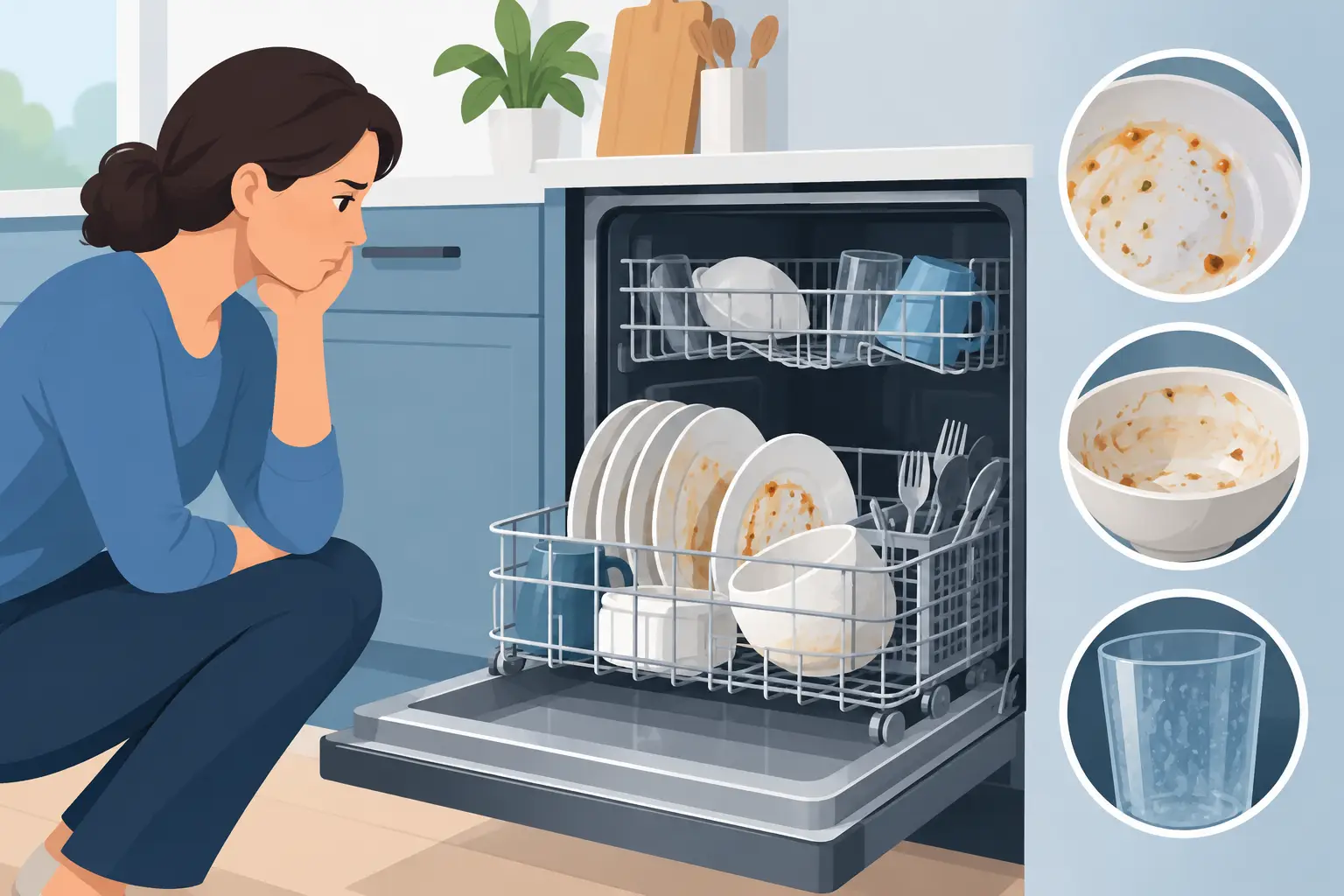
A dishwasher that finishes its cycle with food still on plates, cloudy glasses, or greasy cookware creates more work when it should be saving time. Searches for “why dishwasher leaves dirty dishes” often lead to a simple answer: the appliance is not getting the water pressure, heat, detergent action, or drainage it needs to clean properly.
Some causes can be corrected with a quick cleaning or loading adjustment. Others point to a failing component that needs professional diagnosis. Knowing the difference can help you avoid repeat washes, prevent water damage, and make a confident repair decision.
Why Dishwasher Leaves Dirty Dishes After a Full Cycle
A dishwasher cleans by spraying hot, detergent-treated water through its spray arms at enough pressure to reach every item. It then drains the dirty water away and rinses the load. When any part of that process is interrupted, dishes may come out looking barely washed even though the cycle ran from start to finish.
The pattern of residue matters. Gritty particles usually suggest poor filtration, blocked spray arms, or dirty water being recirculated. A white film can be caused by hard-water minerals or too little rinse aid. Grease and stuck-on food often point to low water temperature, weak circulation, or a detergent issue.
Clogged filters hold food particles in the machine
Most modern dishwashers have a filter near the bottom of the tub. It catches food debris before it can clog the pump or settle back onto your dishes. When that filter becomes coated in grease, paper labels, broken glass, or food particles, water circulation suffers.
Remove the lower rack and check the filter according to your owner’s manual. Rinse it under warm running water and use a soft brush for buildup. Do not force parts that do not easily release. A cracked filter, damaged screen, or debris deeper in the sump may require service.
Blocked spray arms cannot reach the dishes
The spinning spray arms have small openings that direct pressurized water at the load. Mineral deposits and bits of food can plug those openings, reducing their force or preventing the arms from turning.
Check that the upper and lower arms rotate freely by hand. Look closely at the spray holes for buildup. If your dishwasher has removable spray arms, rinse them and clear visible debris carefully. Avoid enlarging the holes with sharp objects, as this can affect the spray pattern. Also make sure tall pans, baking sheets, or utensils are not physically blocking the arms during a cycle.
Incorrect loading creates hidden dirty zones
Even a fully working dishwasher cannot wash surfaces that water cannot reach. Large platters placed along the front or side of the lower rack can block the spray. Bowls stacked tightly trap water and food residue. Utensils nested together may come out with particles still inside them.
Place heavily soiled items facing the center and downward toward the spray arms. Keep the detergent dispenser door clear so a large pot or cutting board cannot stop it from opening. Glasses should sit securely without touching, and cookware should not cover smaller items. Pre-rinsing is not usually necessary, but scraping large food pieces into the trash is still a good habit.
The dishwasher may not be getting hot enough
Heat helps dissolve detergent, loosen grease, and sanitize dishes during many cycles. If the water entering the dishwasher is too cool, or if the appliance’s heating element is failing, you may see greasy film, undissolved detergent, and poor results on heavily soiled loads.
Run hot water at the kitchen sink until it feels hot before starting the dishwasher. This clears cool water from the supply line. Then choose a normal or heavy cycle with a heated wash option if your model offers one. Eco and quick cycles use less water and energy, but they may not be the best choice for baked-on food or oily cookware.
If dishes are consistently cool at the end of a heated cycle, or the detergent pod remains partly intact, a failed heating element, thermostat, sensor, or control issue may be involved. These parts require accurate testing before replacement.
Detergent and Water Quality Can Affect Cleaning Results
Detergent is not a one-size-fits-all solution. Pods, powders, and gels can all work well, but storage conditions, dosage, water hardness, and cycle selection affect the result. Old detergent may not dissolve effectively, especially if it has been exposed to humidity under the sink.
Use fresh detergent and store it in a dry, closed container. If you use a pod, make sure it is placed in the dispenser rather than tossed loosely into the tub unless your manufacturer specifically instructs otherwise. A dispenser that sticks closed can leave the pod or powder unused for most of the cycle.
Hard water is common in many homes and can leave white spots, cloudy glassware, or a chalky coating that looks like leftover soap. Rinse aid helps water sheet off dishes during drying and can reduce spotting. In homes with significant mineral content, adjusting the dishwasher’s water-softening setting, where available, or using a detergent designed for hard water can make a noticeable difference.
Low water level or weak circulation can leave residue behind
A dishwasher needs enough incoming water to build pressure at the spray arms. A kinked supply line, partially closed water valve, clogged inlet screen, or failing water inlet valve can reduce the fill level. The cycle may sound normal, but the machine does not have enough water to wash effectively.
Weak circulation is another common repair issue. The circulation pump moves wash water through the spray arms. When it is worn, obstructed, or electrically failing, dishes may remain dirty in one rack or one area of the dishwasher. You may notice an unusual humming sound, reduced spraying, or detergent that does not dissolve fully.
These problems are not ideal do-it-yourself repairs. Dishwashers combine water, electrical components, pumps, and seals in a tight cabinet space. A technician can identify whether the issue is the inlet valve, circulation pump, motor, control board, or another component before any work begins.
Poor Draining Can Put Dirty Water Back on Dishes
At the end of the wash portion of the cycle, the dishwasher must pump dirty water out completely. If it cannot, food particles and cloudy water may remain in the bottom of the tub or settle onto dishes during the final rinse.
A small amount of clean water near the filter area can be normal on some models. Standing dirty water, a sour odor, visible food debris, or water that rises into the sink are signs of a drainage problem. Check for a clogged filter first. Also inspect the drain hose under the sink for kinks. If the dishwasher was recently installed or plumbing was changed, the drain hose may be routed incorrectly.
Do not use harsh drain cleaners in a dishwasher. They can damage internal components, seals, and plumbing connections. A blocked drain pump, damaged impeller, clogged hose, or disposal connection issue should be handled carefully to prevent leaks beneath the cabinet.
When a Dishwasher Repair Is the Smarter Choice
Cleaning the filter, improving loading habits, and switching to fresh detergent are reasonable first steps. But repeated poor cleaning after those checks deserves attention. A dishwasher that runs but does not wash well may have a mechanical problem that will not improve with another cleaning tablet or a second cycle.
Schedule a professional diagnosis if the appliance has standing water, leaks, burning smells, grinding noises, error codes, a broken detergent dispenser, or consistently cold water during heated cycles. You should also call for help when one rack stays dirty while the other cleans normally, as that often points to a spray-arm, diverter, or circulation problem.
For homeowners and property managers in Mountain View and nearby communities, Your Appliance Repair can diagnose dishwasher cleaning problems, explain the recommended repair clearly, and obtain approval before work begins. There are no hidden charges, and manufacturer-recommended replacement parts help support a repair made to last.
A dishwasher should return dishes ready to put away, not send you back to the sink. If basic maintenance has not restored cleaning performance, an accurate diagnosis can replace guesswork with a practical path back to a working kitchen.