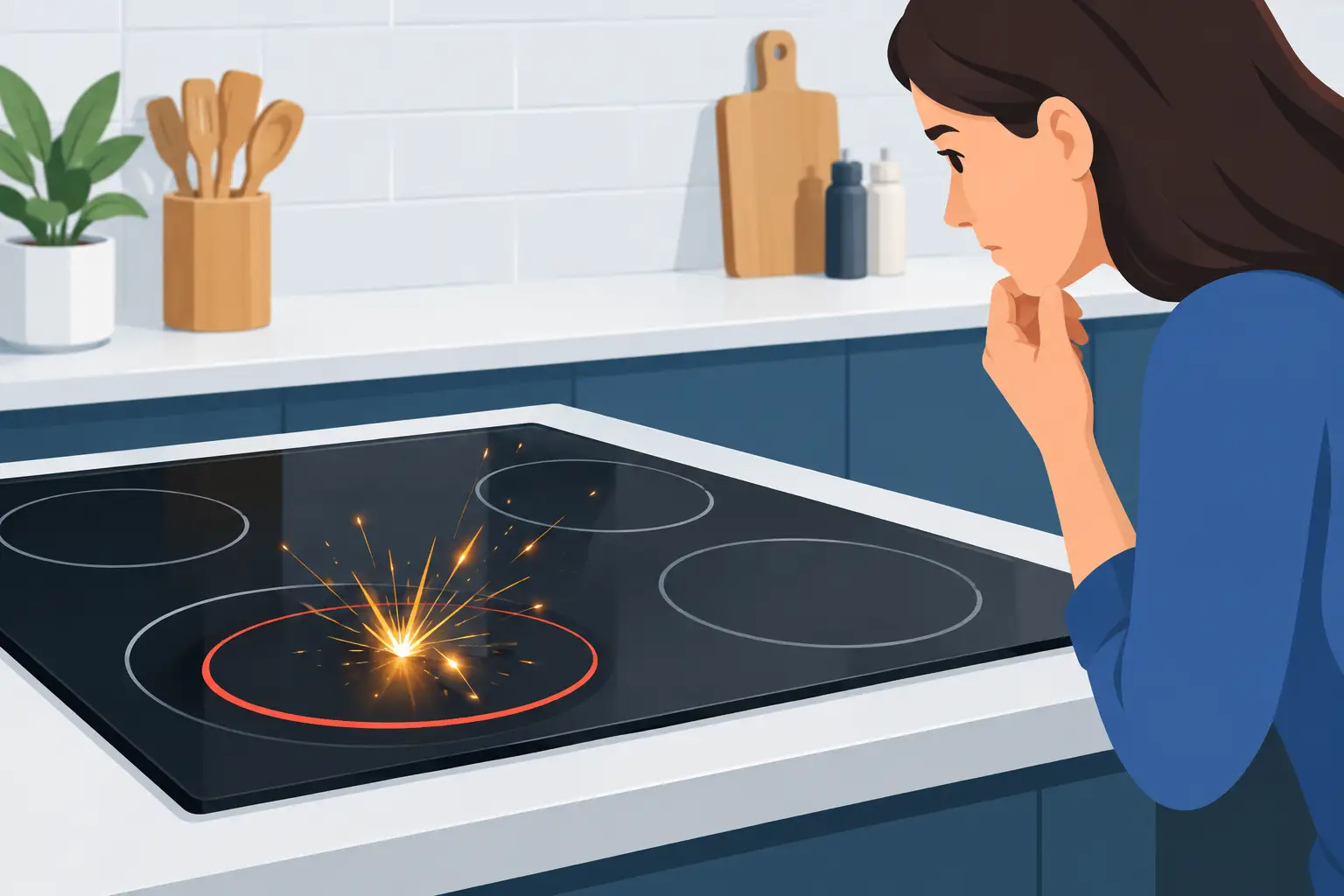
A cooktop sparking continuously is more than an annoying clicking sound. If the burner is not being turned on, the repeated spark can point to an ignition problem that deserves prompt attention. The right response depends on whether you smell gas, see a flame, recently cleaned the cooktop, or have had a spill near the controls. Start with safety, then let a qualified technician identify the failed part before a small issue becomes a larger repair.
Start With the Safety Checks
If you smell gas, hear hissing, or suspect a gas leak, do not try to troubleshoot the cooktop. Do not use electrical switches, lighters, or open flames. Turn off the gas supply only if you can do so safely, leave the home, and contact your gas utility or emergency services from outside.
If there is no gas odor and all burner knobs are in the off position, turn off power to the cooktop at the circuit breaker. A gas cooktop still uses electricity for its spark ignition system, so cutting power stops the clicking and prevents the igniter from continuing to fire. If you can safely access the appliance plug instead, unplugging it is also an option.
Do not keep using a burner that is sparking on its own. Constant sparking can wear down ignition components, and an underlying fault may cause inconsistent lighting or repeated clicking after the flame has started. If one or more burners will not light, use another cooking method until the issue has been inspected.
Why Is Your Cooktop Sparking Continuously?
Most cooktops use an electronic spark ignition system. When you turn a burner knob to the light position, a switch sends a signal to the spark module. The module produces the familiar clicking sound and sends electricity to the igniter electrode beside the burner. Once the flame catches, you release or turn the knob to the desired heat setting.
When that system keeps clicking with the knobs off, it usually means the appliance is receiving a false signal or electricity is tracking where it should not. The cause can be simple, but it is not always visible from the surface.
Moisture around the igniter or controls
Boil-overs, wet cleaning cloths, steam, and heavy humidity can leave moisture around an igniter electrode, burner base, or knob switch. That moisture can create a path for electrical current and trigger repeated sparking. This is common after cleaning a cooktop or after a pot has boiled over.
Once power is off and the cooktop is cool, remove the grates and burner caps if your model allows it. Dry the removable pieces thoroughly with a clean towel and allow the cooktop to air-dry. Do not poke, scrape aggressively, or bend the ceramic igniter. It is fragile, and damage can turn a drying issue into a replacement part repair.
If moisture is the only cause, the clicking may stop after the area has completely dried. However, if the sparking returns or does not stop after drying, schedule service. Water can also reach the burner switch or wiring below the surface.
A stuck or failing burner ignition switch
Each burner knob is connected to an ignition switch. Grease buildup, liquid intrusion, normal wear, or a damaged switch can cause it to remain electrically closed even when the knob is off. The spark module then behaves as if someone is still trying to light a burner.
This problem can be difficult to confirm without disassembling the cooktop. Because access may involve electrical connections and gas components, this is not a repair to guess at. A technician can test the switch harness, isolate the affected control, and replace the failed component with the correct manufacturer-recommended part.
A damaged igniter electrode or wire
The small electrode beside the burner can crack, shift out of position, or collect baked-on food. Its wire can also become damaged or loose. When the spark cannot jump cleanly at the burner, the system may click repeatedly, spark inconsistently, or spark at more than one burner.
You may notice a visible spark jumping to a different metal surface, a burner that lights slowly, or a clicking sound that becomes worse when the burner area is damp. These symptoms call for professional diagnosis. Replacing only the electrode will not solve the problem if the wire, spark module, or burner base is also damaged.
A failing spark module
The spark module is the component that creates and distributes the electrical pulses for ignition. It can fail from age, power surges, moisture, or internal electrical damage. A faulty module may make all igniters click together, continue clicking after a burner is lit, or activate without any knob being turned.
Spark module issues often look similar to switch problems. Accurate testing matters because replacing the wrong part wastes time and money. An experienced repair technician should inspect the full ignition circuit before recommending a repair.
What You Can Check Without Taking the Cooktop Apart
After shutting off power and letting the cooktop cool, check whether the burner caps are seated correctly. A misplaced cap can interfere with ignition and cause repeated clicking while you are trying to light a burner. Wipe away food residue near the igniter and burner ports with a dry, soft cloth.
Think about when the problem started. If it began immediately after a spill or cleaning, moisture is a likely contributor. If it started gradually, affects one knob in particular, or happens without any recent spill, a worn switch or ignition component is more likely.
Avoid spraying cleaner directly around the burner controls or igniters. Excess liquid can seep below the cooktop surface. Also avoid removing control panels, disconnecting wires, or trying to bypass a switch. Gas cooktops combine fuel, flame, and electrical ignition. A repair that appears straightforward can create a safety issue if reassembled incorrectly.
When to Call for Cooktop Ignition Repair
Call for service if the cooktop keeps sparking after it has dried, if the sound returns regularly, or if a burner does not ignite reliably. You should also arrange prompt repair if you see a cracked igniter, smell gas during normal operation, experience tripped breakers, or hear clicking from multiple burners with all controls off.
Landlords and property managers should not delay this repair between tenants or while a resident is using the appliance. A functioning cooktop is an essential part of a safe, usable kitchen, and intermittent ignition issues tend to become more disruptive over time.
During a professional visit, the technician should inspect the burner caps and electrodes, check the ignition switches, test the spark module, and examine accessible wiring for moisture or damage. The goal is not simply to silence the clicking. It is to identify why the system is receiving the signal and correct the source of the problem.
At Your Appliance Repair, we explain the diagnosis and provide pricing before work begins. We will not perform repairs without your prior approval, and there are no hidden charges. Proper replacement parts and a clear repair plan help protect both your cooktop and your household.
Can You Still Cook While It Clicks?
It depends on the symptom, but leaving a cooktop energized while it sparks continuously is not a good idea. If the burners can be lit and you have no gas odor, it may seem tempting to keep cooking until a convenient appointment. The trade-off is that ongoing sparking can worsen component damage and leaves you relying on a malfunctioning ignition system.
Turning off the circuit breaker is the safer choice until the repair is complete. If you need to prepare meals, use another safe appliance or arrange temporary alternatives rather than repeatedly resetting power and hoping the clicking stops.
A cooktop should light predictably, stop sparking when the burner is lit, and stay quiet when every knob is off. If yours does not, protect the appliance now and have the ignition system checked by a qualified local repair professional.