A dryer that suddenly stops working is disruptive. A dryer that keeps running but takes two or three cycles to dry a load can be just as costly, frustrating, and easy to overlook. Knowing the signs dryer needs service gives you a chance to address a developing problem before laundry piles up, energy use climbs, or a safety concern gets worse.
Most dryer problems do not start with a complete failure. They begin with a change in performance, sound, smell, or timing. Pay attention to those changes. A qualified technician can diagnose the cause, explain the repair clearly, and get your approval before any work begins.
Signs Your Dryer Needs Service
1. Clothes take much longer to dry
A normal load that once dried in one cycle but now needs a second or third cycle is one of the most common warning signs. Start with the simple checks: clean the lint screen, avoid overloading the drum, and make sure the selected cycle matches the load.
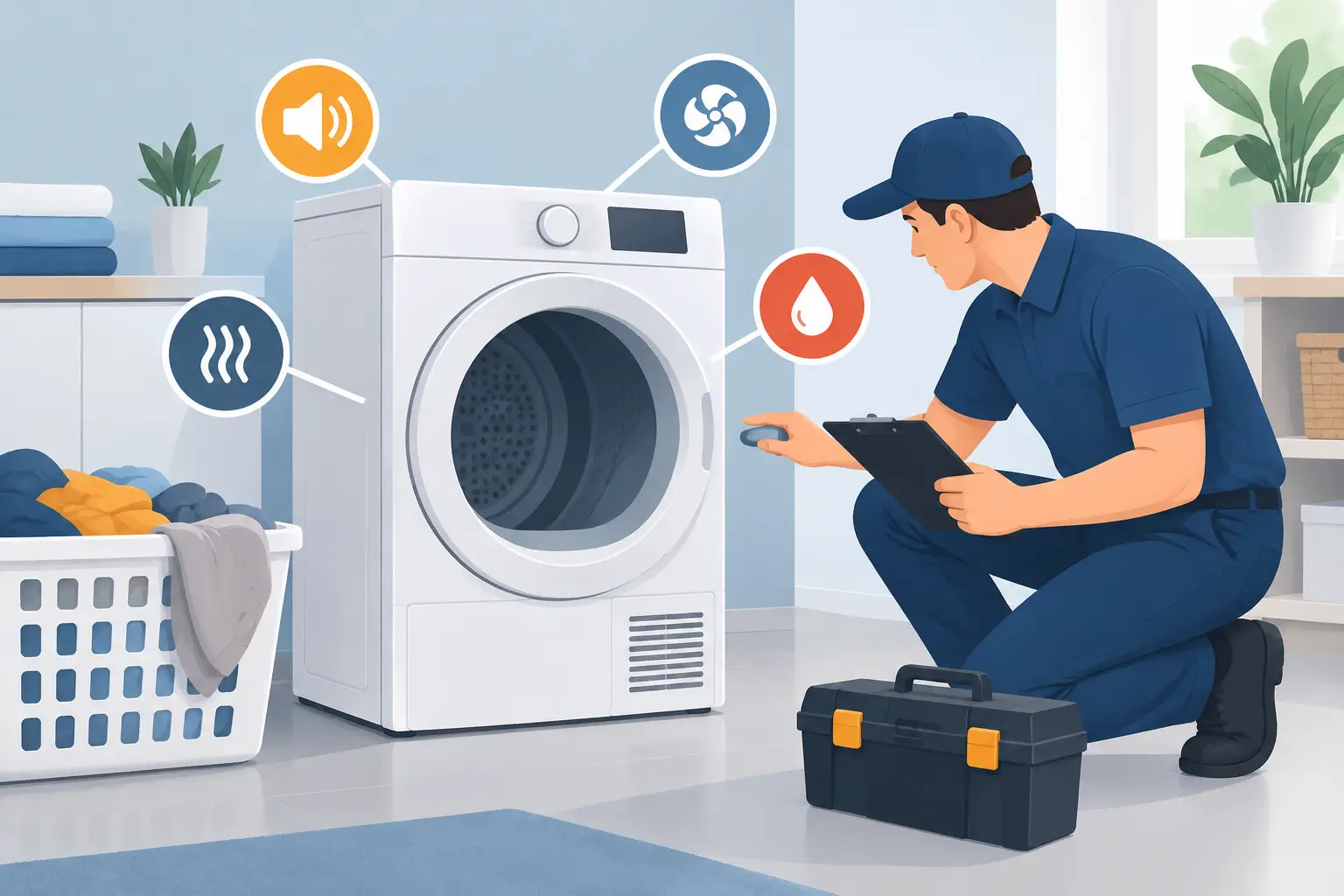
If the problem continues, the cause may be restricted venting, poor airflow, a weak heating element, a faulty thermostat, or a sensor issue. Electric dryers need proper heat and airflow to work efficiently. Gas dryers also need safe ignition and ventilation. Repeatedly running extra cycles is not a solution. It adds wear to fabrics, uses more electricity or gas, and can allow a small repair to become a larger one.
2. The dryer gets hot but clothes stay damp
Heat alone does not dry clothes. Moisture must be carried out through the exhaust system. When the drum feels hot but towels, jeans, or bedding remain damp, airflow may be blocked somewhere beyond the lint screen.
A crushed vent hose, lint buildup in the vent line, or an outdoor vent flap that will not open can keep humid air trapped in the dryer. The appliance may continue to run, but it cannot complete the job efficiently. This situation deserves prompt attention because restricted airflow can cause overheating and increases the risk associated with lint accumulation.
3. You notice burning, musty, or gas odors
A burning odor is never a smell to ignore. It can come from lint near a heating component, an overheating motor, worn wiring, or another internal problem. Turn the dryer off and avoid using it again until the source has been checked.
A musty smell can point to moisture lingering in the machine or vent system. For gas dryers, a gas odor requires immediate action: stop using the appliance, leave the area if the smell is strong, and follow your gas utility’s safety instructions. Do not try to locate or repair a gas leak yourself.
4. The dryer makes new or unusually loud noises
Dryers make some normal sounds as the drum turns and the blower moves air. What is not normal is a new thumping, scraping, squealing, rattling, or grinding noise. A thump may be caused by an item caught in the drum or an uneven load, but a noise that repeats with every rotation can indicate worn drum rollers, a damaged belt, a failing idler pulley, or a problem with the blower wheel.
Do not wait for a strange noise to become a complete breakdown. A worn support part can place extra stress on the motor and other components. Early service is often more straightforward than repairing multiple damaged parts after the dryer stops turning altogether.
5. The drum will not turn, or it stops mid-cycle
If the dryer powers on but the drum does not rotate, the issue may involve the belt, motor, door switch, or control system. A dryer that stops in the middle of a cycle may be overheating, losing power, or experiencing a failing component that works only intermittently.
It is tempting to restart the machine and see whether it finishes the next load. That can be reasonable once after confirming the lint screen is clean and the unit is not hot or smelling unusual. But repeated stops are a service call situation. Continuing to use a dryer with an intermittent electrical or overheating problem can lead to more inconvenience and may create unnecessary risk.
6. The dryer will not start even though it has power
Before assuming the dryer has failed, check whether the door is fully closed, the control lock is on, or a household breaker has tripped. Electric dryers often use a double breaker, and one side can trip while the other remains on. That can create confusing symptoms, including a dryer that appears to have power but will not heat correctly.
If these basic checks do not solve the issue, the problem could involve the start switch, door latch, thermal fuse, control board, wiring, or motor. These parts should be tested properly rather than guessed at. Replacing parts without a confirmed diagnosis can waste money and still leave the real issue unresolved.
7. The dryer has visible damage or leaves marks on clothes
Look inside the drum and around the door opening. Sharp edges, loose seals, damaged drum glides, or a worn felt seal can snag clothing, leave dark streaks, or cause small tears. Clothing caught between the drum and the front or rear panel is more than a laundry nuisance – it is often evidence that a support or seal component needs attention.
A dryer that shakes heavily or walks across the floor can also cause damage over time. Sometimes the fix is as simple as leveling the appliance and adjusting the feet. Other times, the vibration points to worn rollers, a damaged drum, or an installation issue. A technician can separate a simple adjustment from a repair that requires replacement parts.
When to Stop Using Your Dryer Right Away
Some dryer symptoms should not wait for a convenient laundry day. Stop using the dryer if you smell burning, see smoke, hear electrical popping, notice sparks, find the cabinet unusually hot, or suspect a gas leak. Unplug an electric dryer if it is safe to do so. For a suspected gas leak, follow emergency guidance from your gas provider rather than operating switches or appliances nearby.
You should also pause use when the dryer consistently overheats or when the vent system appears blocked. Cleaning the lint screen after every load is essential, but the screen is only one part of the airflow path. Lint can build up in areas you cannot see, especially in long vent runs common in multi-story homes, condominiums, and rental properties.
What to Expect From Professional Dryer Service
A reliable repair begins with diagnosis, not assumptions. The technician should inspect the appliance’s operation, check heat and airflow concerns, identify the failed or worn components, and explain what is causing the problem. You deserve a clear repair recommendation and an upfront price before work begins.
The right repair depends on the dryer’s age, condition, brand, and the cost of the needed part. A newer dryer with a worn belt or failed thermostat is often a practical repair. If an older unit needs several major components, it may make more sense to compare repair costs with replacement. There is no one-size-fits-all answer, which is why an honest diagnosis matters.
For homeowners, landlords, and property managers in Mountain View and nearby communities, timely dryer service can prevent a minor performance issue from turning into a tenant complaint, damaged clothing, or an unexpected appliance replacement. Your Appliance Repair provides trained, courteous technicians, manufacturer-recommended replacement parts, and approval before repairs begin. There are no hidden charges, and completed repairs are protected by labor and parts guarantees along with a 90-day workmanship warranty.
A dryer should make laundry easier, not force you to plan your week around damp clothes and repeated cycles. If its performance has changed, trust that signal. Addressing the problem early can protect your home, your clothing, and your budget while helping you get back to a dependable laundry routine.