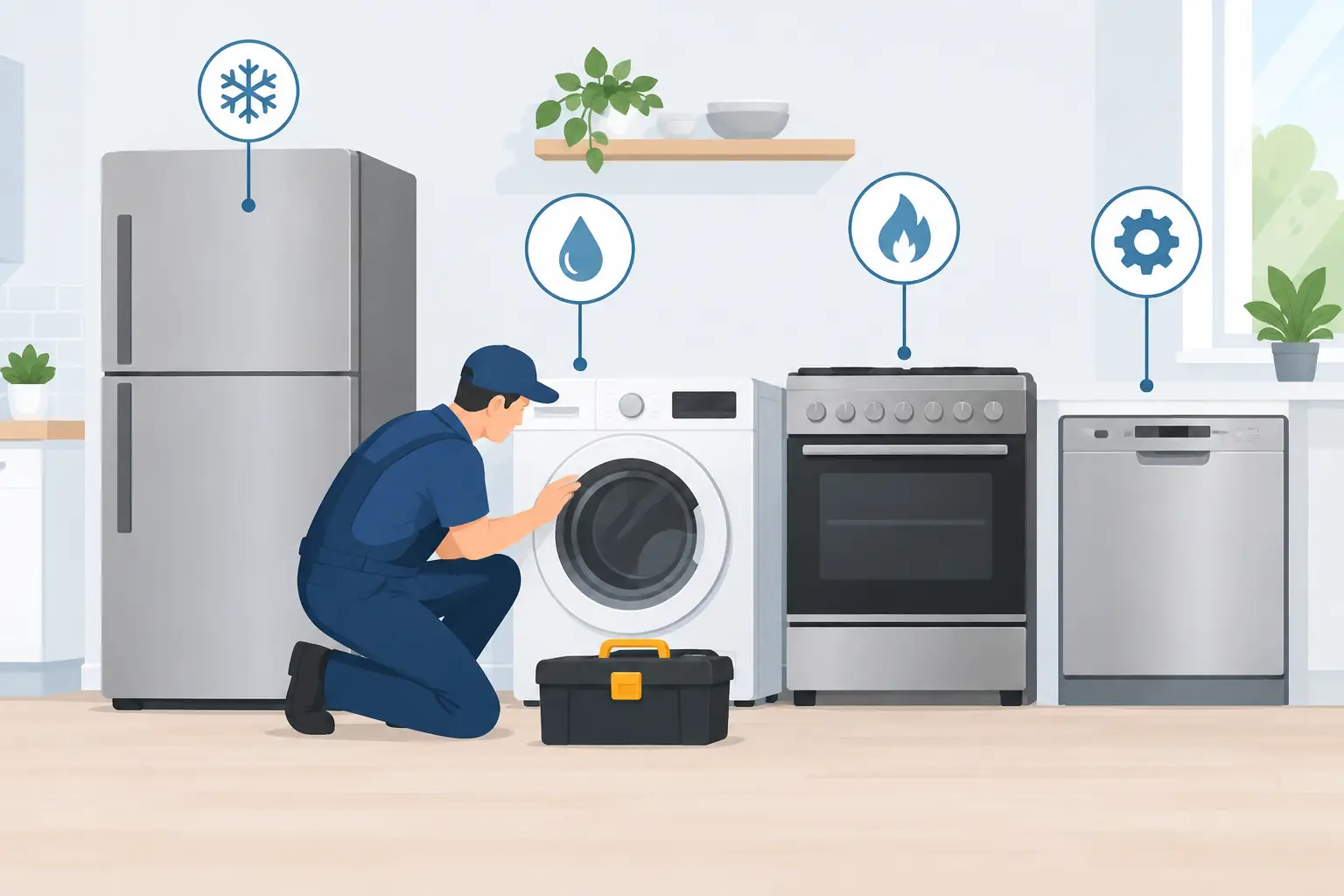
A refrigerator that stops cooling before a full grocery run, a washer that will not drain with laundry waiting, or an oven that will not heat before dinner can throw an entire household off schedule. Residential appliance troubleshooting starts with a few safe observations, not a risky repair attempt. The goal is to identify simple causes, protect your home from further damage, and recognize when a trained technician should take over.
Start Residential Appliance Troubleshooting Safely
Before checking an appliance, protect yourself and the property. Turn the appliance off and unplug it when possible. If it is hardwired, uses gas, has a burning smell, is leaking heavily, or is making sparking or popping sounds, do not continue investigating. Shut off the relevant utility if you can do so safely and arrange professional service.
A quick visual check can still be useful. Look for a tripped circuit breaker, a loose plug, a closed water valve, a kinked hose, or an obvious error code on the display. Take a photo of the code and write down the model number before calling for help. Those details can help a technician arrive prepared and can reduce unnecessary delays.
Avoid taking panels apart, bypassing safety switches, or using tools around live electrical connections. A small issue can become a damaged control board, a water leak, or a personal injury when troubleshooting goes beyond safe limits.
Check Power, Water, Airflow, and Settings First
Many appliance problems have a basic cause that is easy to overlook during a stressful day. Start with the systems the appliance depends on: power, water, drainage, airflow, and settings.
For an appliance that will not turn on, test the outlet with another device if it is safe to do so. Check the breaker panel, but do not repeatedly reset a breaker that trips again. Repeated tripping may point to an electrical fault inside the appliance or in the circuit itself.
For washers and dishwashers, confirm that the water supply valves are fully open and that supply hoses are not bent or crushed. If water is pooling on the floor, stop the cycle and shut off the water supply. Even a slow leak can damage flooring, cabinets, and the areas below your home.
For refrigerators, dryers, and HVAC equipment, airflow matters. A refrigerator needs clear space around its vents and condenser area. A dryer needs a clean lint filter after every load and a properly vented exhaust path. Your HVAC system needs a clean filter and open supply and return vents. Restricted airflow can cause poor performance, longer run times, overheating, and higher utility bills.
Settings deserve a second look, too. A refrigerator may be set too warm after a power outage. A dishwasher may have a delayed-start feature selected. A dryer may be on an air-only or low-heat setting. Confirm the selected cycle before assuming a major part has failed.
Common Appliance Symptoms and What They Can Mean
Refrigerator Not Cooling Properly
First, make sure the doors are closing completely and the door gaskets are clean and intact. Overpacked shelves can block interior vents, while dirty condenser coils can force the system to work harder. If the refrigerator has power but is warm, the compressor is clicking repeatedly, or food is no longer staying at a safe temperature, move perishable items to another cold location and schedule service promptly.
A refrigerator cooling problem can involve the fan motor, defrost system, sealed system, thermostat, control board, or another component. The correct repair depends on an accurate diagnosis. Replacing parts based on a guess often costs more than having the problem tested correctly the first time.
Washer Will Not Drain or Spin
A washer that will not drain may have an uneven load, a blocked drain hose, a clogged pump filter, or a failed drain pump. Redistribute heavy items and try a drain-and-spin cycle once. If the washer still holds water, makes a humming sound, or leaks, stop using it.
Do not force the door open on a front-load washer with water inside. Do not reach into the machine or disconnect hoses without preparing for significant water release. A technician can safely access the drain system, test the pump, and identify whether the issue is mechanical or electronic.
Dryer Takes Too Long to Dry
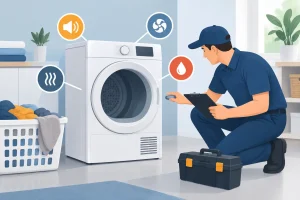
Clean the lint screen first. Then check whether the exterior dryer vent flap opens while the dryer runs. If it does not, airflow may be restricted. A hot dryer with poor venting is more than an inconvenience. Lint buildup can create a fire risk and can shorten the life of the heating system.
If the dryer tumbles but stays cold, the issue may involve the heating element, igniter, thermal fuse, gas valve components, or electrical supply. Electric dryers often require a 240-volt connection, so a partial power issue can allow the drum to turn while preventing heat. This is a good example of why a symptom does not always reveal the failed part.
Dishwasher Leaves Water or Dirty Dishes
Check the filter, spray arms, and drain area for food debris. Use the correct detergent and avoid blocking the spray arms with large cookware. If standing water remains after a cycle, inspect the drain hose under the sink for kinks, but do not disconnect plumbing if you are not prepared for water and debris.
Persistent drainage problems can involve the drain pump, check valve, float switch, air gap, garbage disposal connection, or control system. A dishwasher that leaks from the door or under the unit should be turned off until it can be inspected.
Oven or Cooktop Will Not Heat
Confirm that the appliance has power and that the clock or control panel is not in a locked or delayed mode. For an electric oven, a burner or bake element that does not heat may have failed, but the wiring or control board may also be responsible. For gas cooking equipment, a weak igniter, burner issue, or gas supply problem can prevent proper ignition.
If you smell gas, leave the area, avoid switches and open flames, and contact the appropriate gas utility or emergency service. Do not attempt to relight or disassemble gas components yourself.
Know When a Reset Is Reasonable
Some modern appliances benefit from a simple power reset after a brief outage or control glitch. Turn the appliance off, unplug it or switch off the breaker for a few minutes, then restore power and check the display. This is reasonable only when there are no safety concerns, leaks, smoke, unusual odors, or repeated breaker trips.
A reset is not a repair. If an error code returns, the appliance continues to malfunction, or the issue interrupts daily use, the system needs diagnosis. Clearing a code without finding the cause can allow a small problem to become a larger one.
Why Accurate Diagnosis Protects Your Budget
The least expensive option is not always the lowest service call. An incorrect repair can mean paying for parts that never addressed the failure, then paying again when the appliance still does not work. This is especially true with refrigerators, washers, dryers, ovens, and HVAC systems, where several parts can produce similar symptoms.
A qualified technician should explain what was found, recommend the appropriate repair, and provide pricing before work begins. You should not feel pressured into an unexpected repair or left wondering what was replaced. Manufacturer-recommended parts and warranty protection also matter because the repair should hold up after the technician leaves.
For homeowners, renters, landlords, and property managers in Mountain View and nearby communities, fast communication is part of a dependable repair experience. A broken appliance affects meals, comfort, laundry, and tenant satisfaction. Clear approval, clean work practices, and a technician who arrives on time make a difficult interruption easier to manage.
Keep Small Problems From Becoming Major Repairs
Regular care will not prevent every failure, but it can reduce avoidable wear. Clean refrigerator coils when accessible, remove dryer lint after every load, inspect washer hoses periodically, keep dishwasher filters clear, and replace HVAC filters on a schedule that fits your home and system. Pay attention to changes in noise, performance, run time, and energy use. Those early signals are often easier and less costly to address.
When an appliance is leaking, overheating, failing to cool, or repeatedly stopping mid-cycle, do not wait for a complete breakdown. A careful service call can protect your home, your routine, and the appliances you rely on every day. Your Appliance Repair is ready to diagnose the problem clearly, get your approval before work begins, and help make this the last call you need to make.