
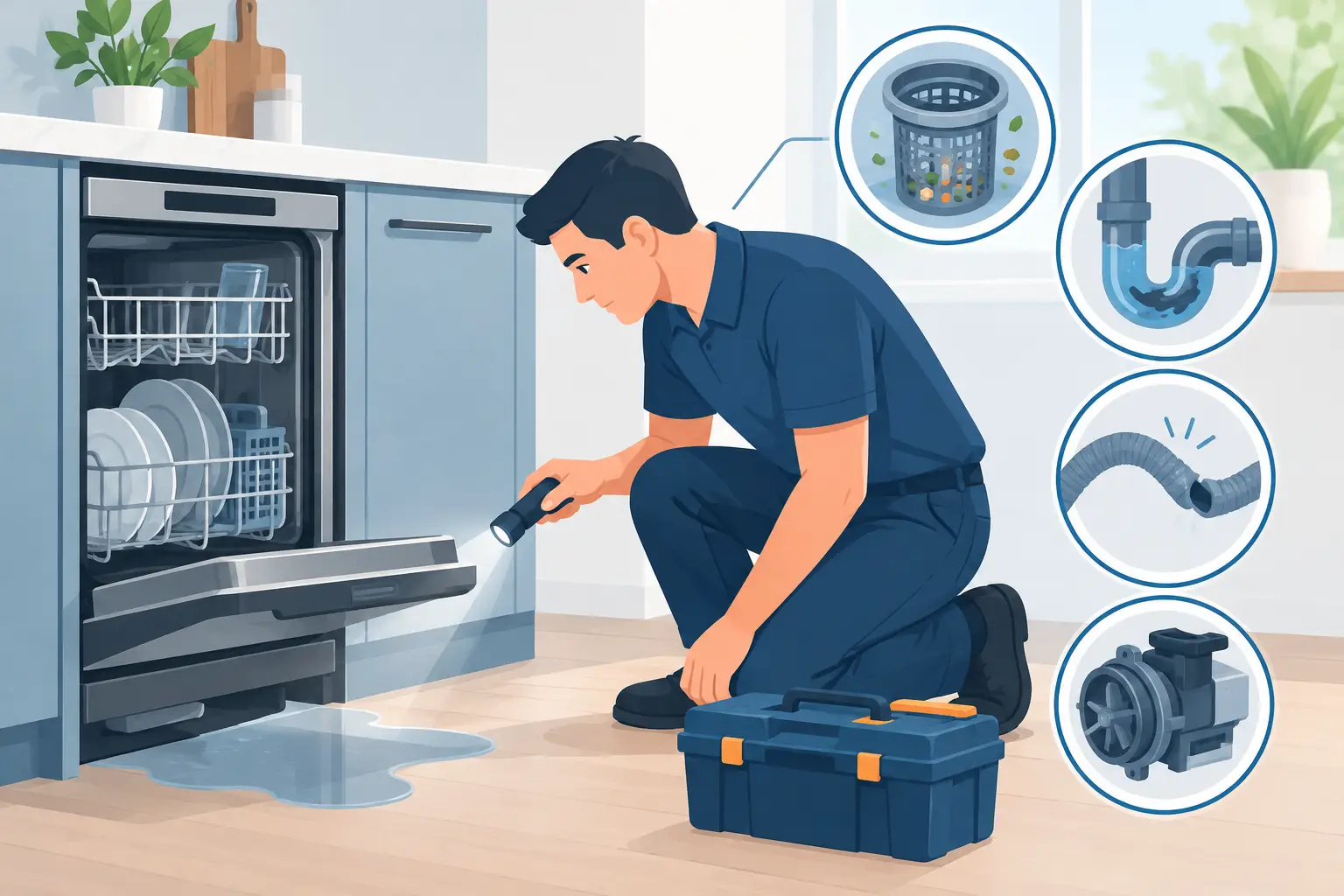
Standing water at the bottom of a dishwasher changes a normal cleanup routine into a kitchen problem fast. A dishwasher drainage issue may be caused by a simple food blockage, but it can also point to a failed drain pump, a restricted hose, or a plumbing connection that needs professional attention. The right next step depends on what the dishwasher is doing, not just how much water you see.
Before assuming the appliance has failed, remember that a small amount of clean water beneath the filter can be normal on some models. Several inches of cloudy water, food particles left on dishes, a bad odor, or water that returns after draining are not normal. Those signs deserve a closer look.
Start With the Safe, Simple Checks
Turn off the dishwasher and remove dishes from the lower rack. If there is standing water, scoop it into a shallow container or soak it up with towels before checking the filter area. Avoid reaching into the sump with bare hands. Small pieces of glass, broken dishes, or sharp bones can collect there.
Most dishwashers have a removable filter at the bottom of the tub. Twist or lift it out according to the model’s instructions, then rinse away grease, labels, food residue, and mineral buildup under warm water. A soft brush can help, but do not force debris through the mesh or damage the filter screen.
Look around the filter housing for obvious obstruction. A popcorn kernel, toothpick, bottle label, or piece of plastic can interfere with water flow. If you can safely remove the item, reinstall the filter correctly and run a short rinse or drain cycle. A filter that is loose, cracked, or installed incorrectly can create its own drainage and wash-performance problems.
Next, check the kitchen sink. If the sink is draining slowly, the dishwasher may be fine while the shared drain line is restricted. Dishwashers commonly drain through the garbage disposal or a sink drain connection, so a clog farther down the plumbing can send water back toward the appliance.
Check the Garbage Disposal Connection
If your dishwasher drains through a garbage disposal, run cold water and operate the disposal briefly to clear food residue. Do not put your hand inside the disposal. If the disposal was recently installed or replaced, verify that the dishwasher inlet knockout plug was removed. Leaving that plug in place blocks the dishwasher hose completely, often causing water to remain in the tub from the very first cycle.
This is a common installation-related issue, but it is not the only possibility. If the disposal is clear and the dishwasher still hums without removing water, the pump or hose may be the actual problem.
Look for an Air Gap or High Loop Problem
Many homes have an air gap near the kitchen faucet, usually a small cap on the countertop. Its purpose is to prevent dirty sink water from flowing back into the dishwasher. If water spills from the air gap while the dishwasher drains, its internal passages or the hose leading to the disposal may be clogged.
Homes without a countertop air gap often use a high loop under the sink. The dishwasher drain hose should rise high beneath the counter before it connects to the disposal or drain line. If the hose has fallen low, water can flow back into the dishwasher after a cycle. Reattaching a loose high loop can solve the problem, but a kinked, split, or heavily clogged hose may need replacement.
What the Dishwasher’s Behavior Can Tell You
The sound and timing of the problem help narrow down the cause. A dishwasher that never attempts to drain may have an electrical, control, or door-latch issue. One that makes a humming sound but leaves water behind may have a jammed or failing drain pump. A unit that drains partway and then stops may have intermittent blockage, a damaged impeller, or a restriction in the hose or household plumbing.
Water returning after the dishwasher has finished is a different clue. That usually suggests a backflow issue rather than a pump issue. Check whether the sink is backing up, whether the air gap is blocked, and whether the drain hose is routed properly. Using the dishwasher while the sink plumbing is clogged can make the mess worse.
A dishwasher that drains but leaves dishes dirty may still have a partial drainage problem. Old water and debris can recirculate during the wash cycle, reducing cleaning performance and causing unpleasant odors. Cleaning the filter is a good first step, but recurring residue means the underlying restriction should be found.
Common Causes of a Dishwasher Drainage Issue
Food buildup is the most common cause, especially when filters are not cleaned regularly. Grease can harden inside the filter, hose, air gap, or disposal connection, while small objects can jam the pump area. Hard-water deposits can also narrow water passages over time.
Drain hoses can become pinched when the dishwasher is pushed too tightly against the cabinet. This is more likely after flooring work, cabinet repairs, or a recent appliance installation. A hose may look fine from the front while being sharply bent behind the dishwasher.
The drain pump is another frequent culprit. Its job is to push water out at the end of a cycle. A worn pump may run loudly, buzz, leak, or fail to move enough water. Depending on the dishwasher model, the pump may be accessible from inside the tub or require pulling the appliance out. Because that work involves electricity, water connections, and possible cabinet damage, it is usually best left to a trained technician.
Less often, the issue is related to a faulty control board, wiring problem, float switch, or sensor. These problems can mimic a clog because the dishwasher may not receive the correct command to drain. Replacing a part without confirming the cause can turn an affordable repair into unnecessary expense.
Avoid Fixes That Can Create a Bigger Repair
Do not pour liquid drain cleaner into a dishwasher. These products can damage hoses, seals, pumps, and metal components, and they create a chemical hazard for anyone servicing the appliance later. They also rarely remove a solid obstruction in a dishwasher drain path.
Avoid repeatedly restarting the cycle in hopes that the water will eventually clear. If the pump is blocked or overheating, repeated attempts can worsen damage. Likewise, do not aggressively probe the drain opening with wire hangers or rigid tools. It is easy to puncture a hose, damage a pump component, or push debris deeper into the system.
If you need to move the dishwasher, shut off power at the breaker and turn off the water supply first. Built-in dishwashers are heavy, often connected to cabinetry, and can scratch floors or strain supply lines when pulled out without preparation.
When to Schedule Dishwasher Repair
A professional diagnosis is the practical choice when you have cleaned the filter, confirmed the sink and disposal are draining, and the water still will not leave the tub. It is also time to call when you hear grinding, repeated humming, burning smells, leaking beneath the dishwasher, or water coming back after every cycle.
For homeowners and property managers in Mountain View and nearby communities, prompt repair can prevent damage to cabinets, flooring, and adjacent plumbing. A qualified technician can test the drain pump, inspect the hose route, check the air gap or disposal connection, and identify whether the problem is in the appliance or the home’s drain system.
Your Appliance Repair approaches this kind of visit with clear approval before work begins. The technician should explain what caused the failure, what repair is recommended, and what the approved cost will be. No hidden charges and no surprise parts replacements are especially important when a drainage problem has already disrupted the kitchen.
Keep Future Drain Problems From Returning
Scrape large food scraps into the trash before loading dishes, even if the dishwasher is designed to handle light residue. Clean the filter on a regular schedule based on how often the appliance runs. For many households, once a month is a sensible starting point; households that cook frequently may need to check it more often.
Run hot water at the sink before starting a cycle if your dishwasher connects to a hot-water line that takes time to warm up. This supports better cleaning and helps reduce greasy buildup. Use the right amount of dishwasher detergent, too. Excess detergent can leave residue, while too little can allow grease to collect inside the machine.
A dishwasher should leave the kitchen quieter and cleaner, not force you to bail out murky water after dinner. If the basic checks do not restore normal draining, a careful repair now is usually less stressful than waiting for a leak or a complete failure.