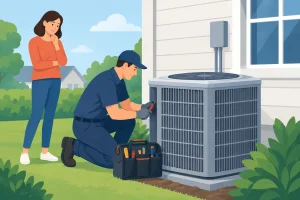
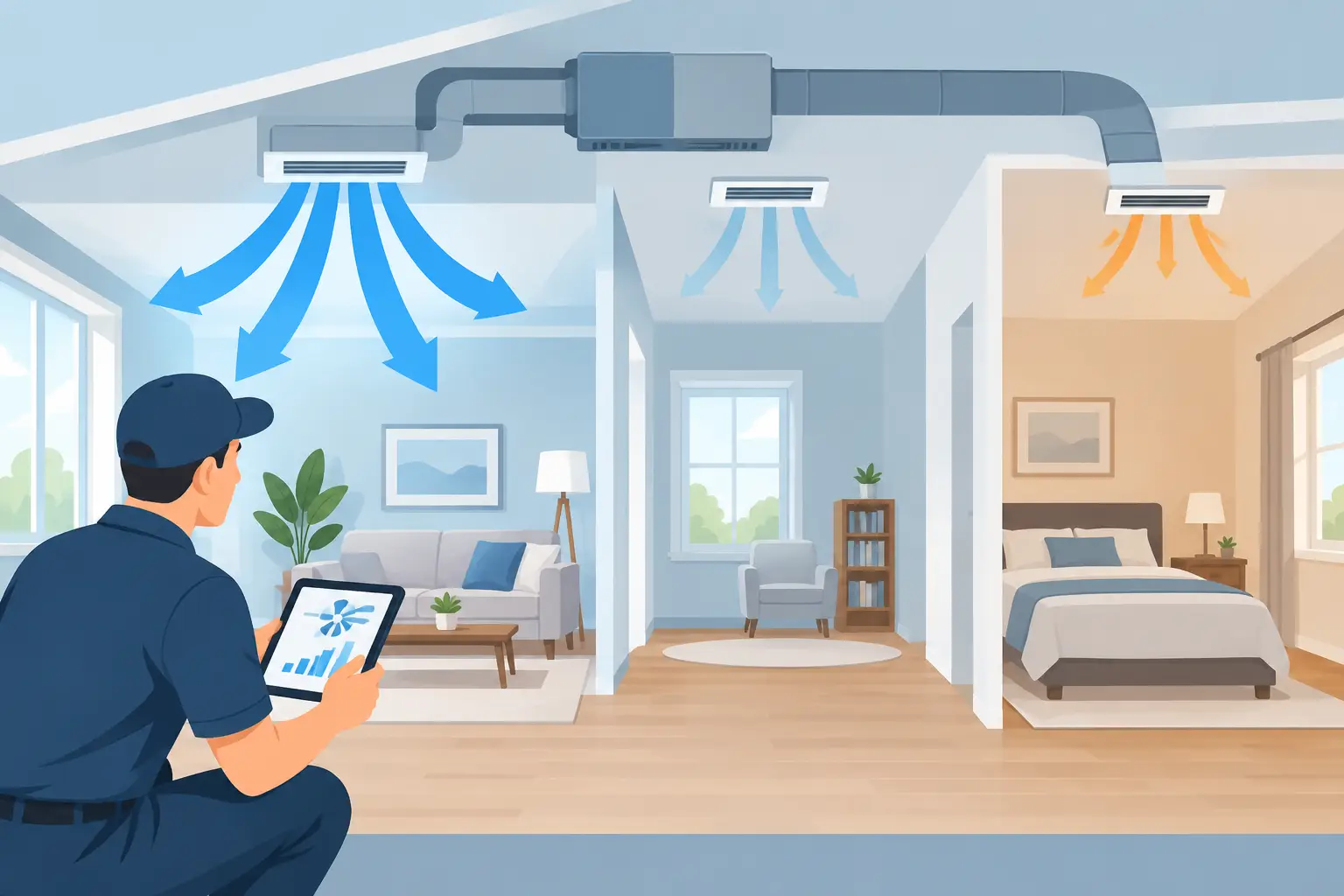
A bedroom that stays warm while the rest of the home cools down is more than a small annoyance. Weak airflow can make rooms uncomfortable, increase utility costs, and put unnecessary strain on your heating and cooling equipment. Proper HVAC airflow diagnosis identifies why conditioned air is not reaching the space as it should, so the repair addresses the real cause instead of masking the symptom.
The problem is not always the air conditioner or furnace itself. A clean, properly sized system can still perform poorly when air cannot move freely through the filter, blower, ductwork, registers, and return vents. That is why a careful diagnosis matters before anyone recommends a major repair or replacement.
Signs Your HVAC Has an Airflow Problem
Airflow issues usually show up in everyday patterns around the house. You may notice one or two rooms that are consistently hotter or colder than the thermostat setting. Some vents may barely push air, while others seem unusually forceful. The system may run longer than normal, cycle repeatedly, or make whistling, rattling, or rushing sounds.
Other warning signs include dusty rooms, musty odors near vents, ice on air-conditioning components, or a filter that becomes dirty unusually fast. A high energy bill can also point to an airflow restriction, although it can have other causes. The key is to look at the full pattern instead of assuming that one uncomfortable room means the entire HVAC system has failed.
What a Professional HVAC Airflow Diagnosis Checks
A qualified technician starts by listening to what has changed in your home. Did the problem begin after remodeling, duct work, a filter change, or a new thermostat? Is it worse upstairs, only during very hot weather, or limited to one room? Those details help narrow the inspection.
Filters, returns, and supply registers
The simplest restriction is often at the filter. A clogged filter can reduce airflow throughout the home and may cause the system to work harder than it should. The wrong filter can create the same issue. Very high-efficiency filters can be useful when the equipment is designed for them, but a filter that is too restrictive for the system may reduce air volume.
Return vents deserve the same attention. Returns pull household air back to the system to be heated or cooled again. Furniture, rugs, closed doors, or blocked grilles can interfere with that path. In homes with a single central return, closing bedroom doors may leave rooms with limited air circulation even when the supply vents are open.
Supply registers are checked for blockage, damage, and proper adjustment. Closing multiple vents to force more air into another room usually does not solve the underlying issue. It can raise duct pressure, create noise, and make the equipment less efficient.
The blower and indoor equipment
The indoor blower moves air through the system. If its motor, capacitor, control setting, wheel, or electrical components are not working correctly, the system may produce weak airflow at every vent. Dirt buildup on the blower wheel or indoor coil can also restrict movement, even though the system still turns on and appears to run.
For air conditioning, a dirty evaporator coil may limit both airflow and cooling performance. For heating systems, blower operation and safety controls must be evaluated carefully. These are not homeowner repairs. Electrical equipment, sharp metal edges, refrigerant components, and combustion systems require trained service.
Ductwork, dampers, and air leaks
Duct problems often explain why one part of a home feels different from another. Flexible duct can become crushed or disconnected. Older duct connections can leak air into an attic, crawl space, garage, or wall cavity before it reaches the room. A damper may be closed or improperly set after previous work.
Duct sizing is another possibility, especially in additions, converted garages, or homes that have been remodeled. If the duct serving a room is too small, the room may never receive enough conditioned air during peak demand. Correcting that issue may involve duct modification rather than replacing otherwise functional HVAC equipment.
A technician may inspect accessible ducts, measure air movement, compare supply and return conditions, and verify that the equipment is operating within its intended range. The exact testing depends on the system, the home layout, and the symptoms you are experiencing.
Why Uneven Temperatures Are Not Always an Airflow Repair
An uneven room can be caused by airflow, but it can also be a heat-gain or heat-loss issue. A west-facing bedroom with large windows may become hot every afternoon because sunlight is overwhelming the room. Poor insulation, attic heat, gaps around windows, and unsealed exterior openings can also make a room difficult to cool or heat.
Thermostat placement matters too. If the thermostat is located in a naturally cool hallway, it may satisfy the system before a sunny bedroom reaches a comfortable temperature. In multi-story homes, warm air naturally rises, which can make upstairs areas harder to cool without the right system settings, duct design, insulation, or zoning strategy.
This is where an honest diagnosis protects you. Adding a new vent, replacing a thermostat, or installing a larger system may sound like a quick solution, but each option has trade-offs. A larger system can cycle too quickly and may not improve comfort if the ductwork or building envelope is the real problem. The right repair depends on what testing and inspection reveal.
Safe Checks You Can Make Before Scheduling Service
There are a few basic checks homeowners and renters can make without opening equipment panels or changing wiring. First, make sure all supply registers and return grilles are uncovered. Check that furniture, curtains, and boxes are not blocking them.
Next, inspect the air filter and replace it if it is visibly loaded with dust or if it is past the manufacturer’s recommended interval. Use the correct filter size, and make sure it is installed in the direction indicated by the airflow arrow. Do not run the system without a filter as a shortcut.
Then, confirm that the thermostat mode, temperature setting, and fan setting are correct. If the fan is set to “On,” it runs continuously. If it is set to “Auto,” it runs only during heating or cooling cycles. Neither setting fixes a restriction, but knowing the setting helps explain what you are hearing and feeling at the vents.
If you see ice, smell burning, hear loud scraping, notice water around the indoor unit, or have little to no airflow from most vents, turn the system off and request service. Continuing to run equipment with a serious restriction can lead to additional damage.
What to Expect From a Clear Repair Recommendation
A dependable HVAC service visit should leave you with understandable answers. You should know whether the issue is a maintenance item, a failed component, a duct problem, a system adjustment, or a condition outside the HVAC equipment itself. You should also understand what repair is recommended, why it is needed, and what it will cost before work begins.
At Your Appliance Repair, our technicians focus on finding the cause of the comfort problem, explaining the available repair, and obtaining your approval before proceeding. There are no hidden charges, and we use appropriate manufacturer-recommended parts when replacement parts are needed. Completed repairs are backed by guarantees on labor and parts, plus a 90-day workmanship warranty at no additional charge.
For homeowners and property managers in Mountain View and nearby communities, accurate diagnosis can prevent repeat service calls and avoid spending money on the wrong fix. Whether the answer is a filter, blower repair, duct correction, or a comfort issue tied to the home itself, the goal is the same: dependable airflow and a system that can do its job without unnecessary strain.
If one room never feels right or airflow has changed suddenly, do not settle for repeatedly adjusting the thermostat. A careful inspection can turn an ongoing comfort problem into a clear, approved repair plan.