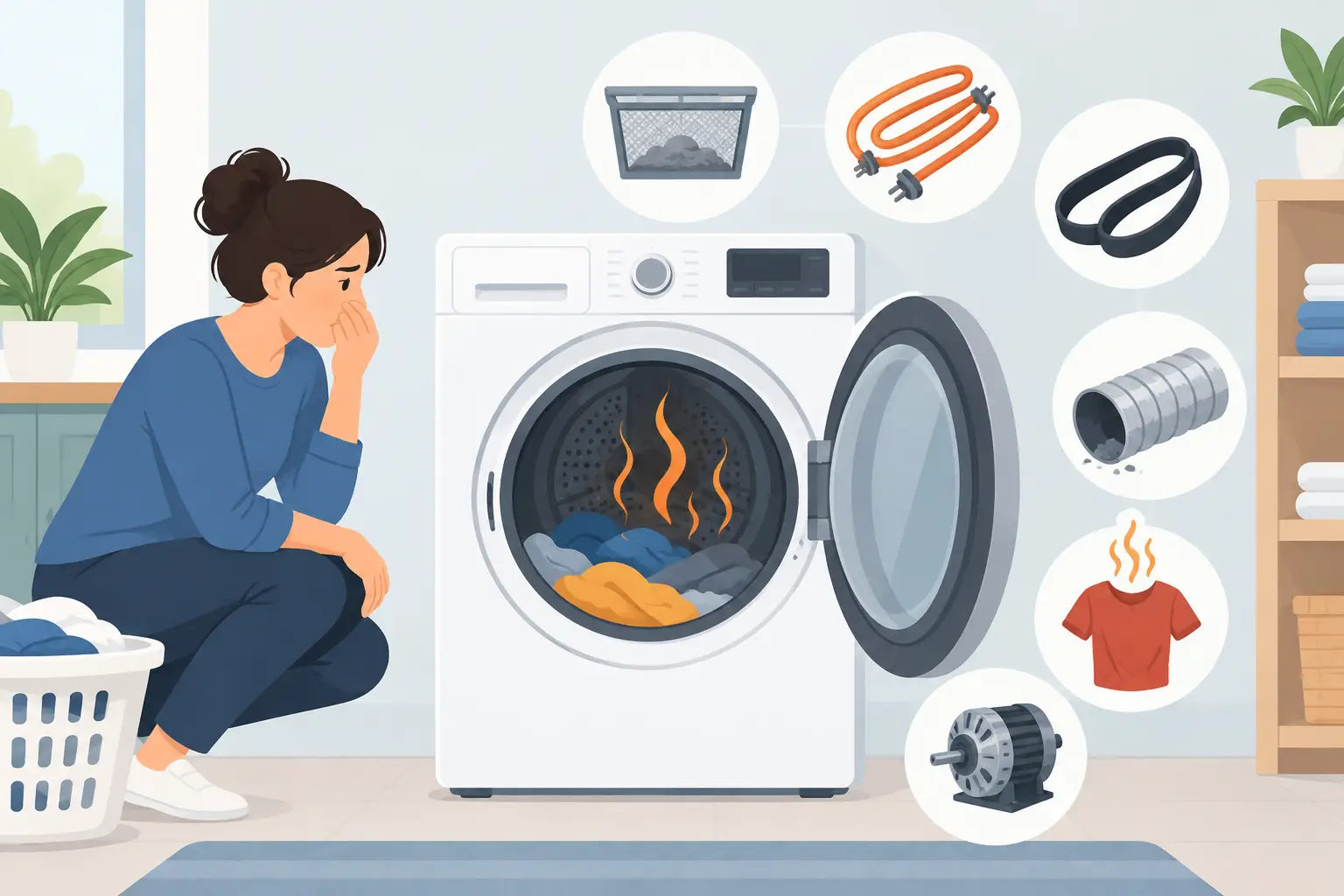
A burning smell from a dryer is not a load of laundry you should “finish first.” Turn the dryer off, unplug it if you can safely reach the plug, and do not restart it until you know why it happened. If you searched what causes dryer burning smell, the short answer is that lint, overheating parts, electrical problems, or a slipping belt may be involved. Some causes are minor. Others can create a real fire risk.
What Causes a Dryer Burning Smell?
The smell itself offers useful clues. A hot, dusty odor often points to lint buildup or restricted airflow. A sharp plastic, rubber, or electrical smell may indicate a component inside the dryer is overheating. The safest response is the same either way: stop the cycle and inspect only what you can see without taking the machine apart.
A dryer creates heat, moves air, and turns a heavy drum at the same time. When airflow is blocked, a moving part drags, or wiring gets too hot, the appliance may produce a burning odor before it stops working completely. Waiting for the smell to disappear can allow a small repair to become a damaged dryer, a ruined vent system, or a dangerous fire hazard.
1. Lint buildup in the lint screen or vent
Lint is the most common reason a dryer smells hot or burnt. Even when you clean the lint screen after every load, fine lint can build up below the screen housing, in the exhaust duct, behind the dryer, and at the outside vent hood. That buildup limits airflow, forcing heat to remain inside the dryer longer than it should.
You may notice clothes taking more than one cycle to dry, a dryer cabinet that feels unusually hot, or weak airflow at the exterior vent. These are not just inconveniences. Restricted venting makes the dryer work harder and can cause lint near hot components to scorch.
Remove and clean the lint screen first. Then check that the outside vent flap opens freely while the dryer is running. If airflow is weak or the vent path is long, crushed, disconnected, or packed with lint, professional vent cleaning and inspection are the appropriate next steps.
2. Something is trapped near the heating element
Dryer pockets collect more than lint. Tissues, paper, candy wrappers, socks, pet hair, and even small pieces of plastic can make their way past the drum or lint filter area. If an item lands near the heating element or another hot surface, it can create a distinct burning-paper or melting-plastic smell.
Do not keep running the dryer in hopes that the object will burn away. An appliance technician can inspect the interior safely, remove debris, and check for heat damage. This is especially wise if the odor returns after you have cleaned the lint screen and confirmed the vent is clear.
3. A worn drum belt or roller is overheating
A dryer drum rides on rollers and is turned by a belt. Over time, a belt can fray, crack, slip, or rub against another part. Rollers, glides, or the idler pulley can also wear down and create friction. The resulting odor is often similar to hot rubber.
Listen for squealing, thumping, scraping, or a drum that turns unevenly. A burning-rubber smell paired with new noises usually means the dryer should stay off until it is inspected. Continuing to use it can damage the motor or cause the belt to break during a cycle.
4. The motor is working too hard
The dryer motor can overheat when the drum is overloaded, airflow is restricted, or internal parts create excess drag. A hot electrical or oily smell may come from a motor that is straining. The dryer may shut off mid-cycle, hum without starting, or run only after it has cooled down.
An occasional overloaded load is not always a sign of a failing motor, but repeated overheating is not normal. Avoid packing bulky bedding, towels, or heavy laundry into the drum so tightly that it cannot tumble freely. If the smell continues with ordinary-sized loads, the motor and its related components need professional diagnosis.
5. Electrical wiring or a control component is overheating
A sharp, acrid odor is more concerning than a dusty heat smell. Damaged wiring, loose connections, a failing terminal block, a burned outlet, or a malfunctioning control board can overheat and produce an electrical burning odor. You may also see flickering lights, a tripped breaker, scorch marks around the plug, or a dryer that starts and stops unpredictably.
Do not reset a breaker repeatedly or use an extension cord to keep the dryer running. Unplug the appliance if it is safe to do so, and arrange for service. If you see smoke, sparks, visible scorching, or an active fire, leave the area and call emergency services.
6. A heating element is damaged or cycling improperly
Electric dryers use a heating element that becomes extremely hot. If the element warps, breaks, or contacts the metal housing, it may heat when it should not or become hotter than intended. A failed thermostat, thermal fuse, or control component can also interfere with normal temperature regulation.
In some cases, the dryer may still dry clothes, which can make the issue easy to postpone. But a burning smell, unusually high heat, or clothes that come out hotter than normal should be treated as a warning. An accurate diagnosis matters because replacing the wrong part will not correct the underlying overheating problem.
7. A gas dryer has a burner or venting problem
Gas dryers add another safety consideration. A brief gas smell when the burner first ignites may occur, but a persistent gas odor is never something to ignore. Turn off the dryer, avoid creating sparks or flames nearby, leave the area if the smell is strong, and contact your gas utility or emergency services as appropriate.
Gas dryers can also smell burnt when airflow is restricted or when burner-related components are not operating correctly. Because gas and combustion systems require specialized handling, do not remove panels or attempt burner repairs yourself.
What to Do Before You Use the Dryer Again
Start with the simple, safe checks. Clean the lint screen, let the dryer cool fully, and look behind the machine for a crushed or detached vent hose. Check the exterior vent hood for lint, nests, or a flap that will not open. If you find a minor blockage you can safely remove, clear it before scheduling another load.
Do not vacuum deep inside the dryer housing, disassemble electrical panels, or operate the dryer with the vent disconnected. A disconnected vent releases heat and moisture into your laundry area, and it can spread lint where it does not belong.
It also helps to think about when the odor appeared. If it started after a new dryer was installed, a light manufacturing residue smell may fade after the first few uses. That should be mild, temporary, and never accompanied by smoke, visible scorching, or poor drying performance. Any strong or recurring burning smell needs attention.
When to Call for Dryer Repair
Call for service promptly if the odor returns after cleaning the lint screen and checking the exterior vent. You should also stop using the dryer if it has smoke, sparks, abnormal noises, repeated breaker trips, a hot plug or outlet, a gas smell, or clothes that require multiple drying cycles.
For homeowners and property managers in Mountain View and nearby communities, a qualified technician can inspect the vent path, heating system, motor, belt, rollers, wiring, and safety controls without guesswork. Your Appliance Repair explains the problem and obtains approval before repairs begin, so there are no hidden charges or surprise work.
A dryer should smell like clean laundry, not hot plastic, smoke, or scorched lint. Taking the machine out of service early protects your home, your laundry routine, and often your repair budget.