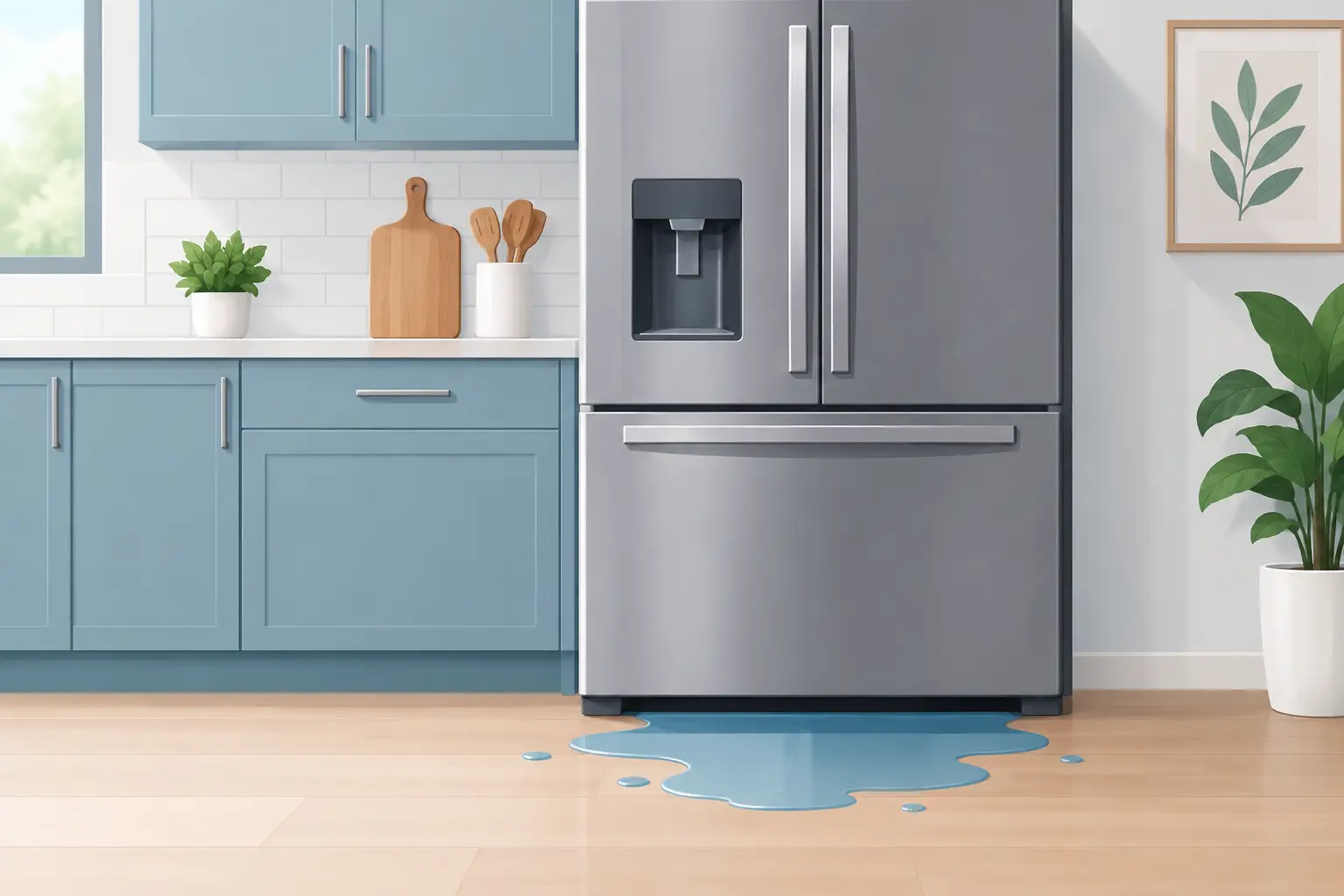
A puddle under the refrigerator can turn a normal morning into a cleanup, food-safety, and flooring concern very quickly. If your search is “why refrigerator is leaking water,” the answer is usually connected to condensation, ice buildup, a blocked drain, or a water-line problem. The source is not always where the water appears, so wiping up the floor does not necessarily solve the issue.
Start by protecting the area. Dry the floor, keep children and pets away from the wet spot, and avoid using the refrigerator if water is near an electrical outlet or cord. Then look for patterns: Is the water inside the fresh-food section, under the front of the unit, behind it, or near the ice maker? That detail helps narrow down the repair.
Why Refrigerator Is Leaking Water: The Most Common Causes
A clogged defrost drain
A blocked defrost drain is one of the most common reasons a refrigerator leaks water. Frost-free refrigerators periodically melt frost from the evaporator coils. The resulting water should flow through a small drain opening and tube to a pan beneath the appliance, where it evaporates.
If food particles, ice, or debris block that opening, the water has nowhere to go. It can collect beneath the crisper drawers, freeze into a sheet of ice, then overflow onto the kitchen floor. You may notice water inside the refrigerator before you see a puddle outside it.
Some homeowners can clear light debris after unplugging the refrigerator and following the manufacturer’s instructions. However, a drain line can freeze farther down where it is hard to reach. Forcing tools into the drain or pouring very hot water into plastic components can cause more damage. If the leak returns after a basic cleaning, the drain system should be inspected professionally.
A cracked or overflowing drain pan
The drain pan sits underneath the refrigerator and catches normal defrost water. In most units, the heat from the compressor helps that water evaporate. A pan that is cracked, out of position, or unusually full can leave water under or behind the appliance.
This issue is more likely when the refrigerator is not level, when the unit has been moved recently, or when an underlying defrost problem sends too much water into the pan. Access varies by model. Pulling a heavy refrigerator away from the wall without help can scratch flooring, pinch a water line, or strain your back, so this is often better left to a technician.
A leaking water supply line
If your refrigerator has a water dispenser or ice maker, it has a water supply line. A loose fitting, worn tube, split connection, or damaged valve can leak slowly behind the unit. Because the water may run along the floor before it becomes visible, the puddle can appear at the front even though the problem is at the back.
Look carefully for moisture behind the refrigerator, around the shutoff valve, and at the connection point on the back of the unit. Do not tug on the line. If you see active dripping, turn off the refrigerator’s water supply if you can do so safely and arrange service. A small line leak can damage baseboards, cabinets, and flooring long before it becomes a major puddle.
A faulty water filter or filter housing
A refrigerator water filter can leak after replacement if it was not seated fully, if the wrong filter was installed, or if an O-ring is damaged. Filter housings can also crack with age. Water may drip inside the refrigerator, below the filter area, or down the back of the appliance.
Remove and reinstall the filter only if your owner’s manual permits it and the area is dry enough to handle safely. Make sure the replacement is the correct model and has not been cross-threaded. If water continues after the filter is properly installed, stop using the dispenser and have the housing and connections checked.
A damaged ice maker or frozen fill tube
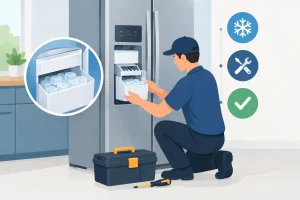
An ice maker can leak when its fill tube freezes, its inlet valve fails to close completely, or its ice mold cracks. You may see ice buildup near the back of the freezer, water beneath the ice bin, or a leak that happens shortly after the ice maker refills.
Turning off the ice maker may temporarily stop the leak, which is useful information for diagnosis. It does not always mean the ice maker itself is the only issue. A weak water inlet valve, incorrect freezer temperature, or a frozen fill tube can all contribute.
Doors that do not seal correctly
Warm, humid air entering through a poor door seal creates excess condensation. Over time, that moisture can drip inside the refrigerator or overwhelm the normal defrost process. A door may fail to seal because of a dirty gasket, a torn gasket, overloaded shelves, misaligned hinges, or a refrigerator that is not level.
Check whether containers or drawers are preventing the door from closing. Wipe the gasket with mild soap and water, then dry it completely. If the seal is ripped, hardened, or pulling away from the door, it should be replaced. Repeated condensation is not just a leak concern. It can also raise energy use and affect temperature control.
Where the Water Appears Can Point to the Problem
Water under the crisper drawers usually points toward a clogged defrost drain or excess interior condensation. Water under the front edge can come from a drain problem, but it can also travel forward from a leak at the back. Water behind the refrigerator is more suspicious for a supply line, inlet valve, or drain-pan issue.
A leak from the dispenser area or filter compartment often involves the filter, housing, or water tubing. Ice or water concentrated in the freezer near the ice maker suggests a fill-tube or inlet-valve concern. These are clues, not guarantees. Modern refrigerators have several interconnected systems, and the correct repair depends on the appliance’s design and the exact leak location.
Safe Checks You Can Make Before Calling for Repair
You do not need to disassemble your refrigerator to gather useful information. First, remove towels and dry the area completely so you can tell where fresh water begins. Next, check that both doors close fully and that the refrigerator is not tilted noticeably forward. Many units need a slight backward tilt so doors close properly, but use the manufacturer’s leveling guidance rather than guessing.
Inspect the water filter and the visible water line connections for drips. If the refrigerator has an ice maker, observe whether the leak changes when the ice maker is switched off. Also listen for unusual sounds, such as constant filling, clicking, or an ice maker cycling repeatedly.
Avoid chipping away ice with knives or sharp tools. Do not remove electrical panels, bypass a water filter, or use a hair dryer around standing water. Those shortcuts can create a bigger repair and may compromise food safety or electrical safety.
When a Refrigerator Leak Needs Professional Service
Call for refrigerator repair promptly when water keeps returning, the leak is active, ice is building up inside the freezer, or the refrigerator is not holding a safe temperature. You should also schedule service if you see a cracked water line, a damaged filter housing, a broken drain pan, or signs of water damage around the appliance.
For homeowners, landlords, and property managers in Mountain View and nearby communities, a fast diagnosis can prevent a minor appliance issue from becoming a flooring or cabinet repair. Your Appliance Repair provides clear explanations before work begins. We will not perform any repairs without your prior approval, and there are no hidden charges.
A refrigerator should protect your food, not create a water-damage risk in your kitchen. Keep the area dry, note where the leak begins, and arrange qualified service before a small puddle becomes a larger problem.