A cold morning should not start with a thermostat argument. When a heating system is nearing the end of its service life, the heat pump versus furnace decision affects more than the temperature in one room. It affects monthly energy costs, indoor comfort, installation needs, maintenance planning, and how confidently your household gets through the next cold spell.
For homeowners, landlords, and property managers in Mountain View and nearby communities, there is no single correct answer. The right system depends on your home, existing equipment, utility costs, comfort preferences, and the condition of your ductwork. A qualified HVAC diagnosis should come before a major replacement decision, especially if the current system has uneven heating, frequent breakdowns, or rising utility bills.
Heat Pump Versus Furnace: The Core Difference
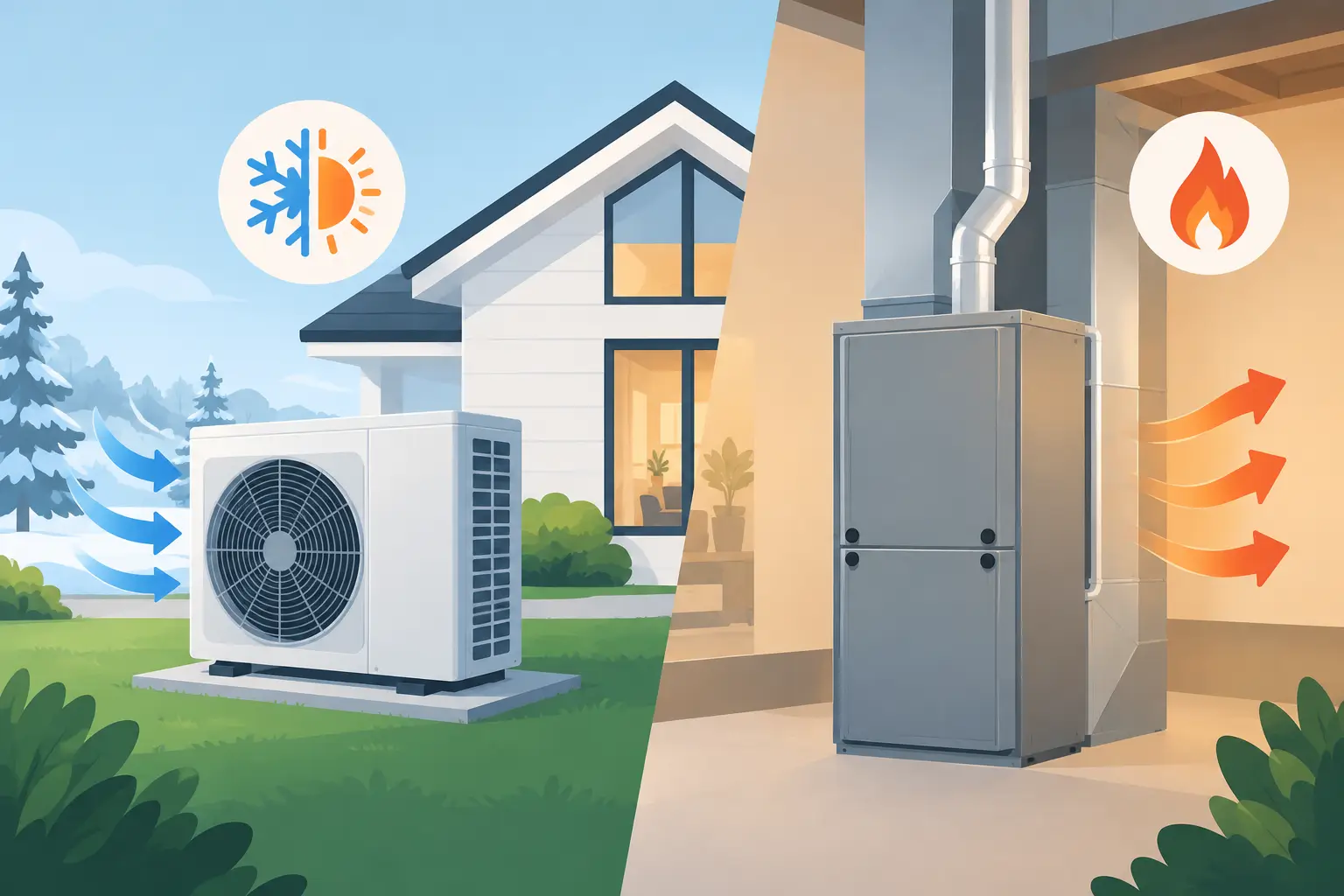
A furnace creates heat. Most residential furnaces burn natural gas, while electric furnaces use electric resistance heating. The furnace then moves that heat through the home using a blower and ductwork.
A heat pump does not create heat in the same way. It transfers heat from outdoor air to indoor air during heating season. In cooling season, it reverses direction and works like a central air conditioner, moving heat out of the house. That two-in-one function is a major reason heat pumps are popular in mild California climates.
Both systems can keep a home comfortable when properly sized, installed, and maintained. The question is not whether one technology is universally better. It is which system will provide dependable comfort in your particular home without creating avoidable operating or repair costs.
Why Heat Pumps Often Make Sense in the Bay Area
The climate across Mountain View, Palo Alto, Sunnyvale, Cupertino, and surrounding communities is generally favorable for air-source heat pumps. Winters are mild compared with regions that experience extended subfreezing temperatures, so a modern heat pump can often operate efficiently through most of the heating season.
Because it also provides air conditioning, a heat pump can replace both an aging furnace and a separate central AC unit. That may simplify equipment planning and reduce the number of major systems that need replacement. For a home with an older air conditioner and furnace, this can be a meaningful advantage.
Heat pumps also avoid on-site fuel combustion. There is no gas burner, pilot system, or heat exchanger involved in producing heat. That does not mean they are maintenance-free, but it does remove some furnace-specific concerns.
The trade-off is that heat pumps generally deliver a gentler stream of warm air than a gas furnace. The house can still reach the thermostat setting, but homeowners accustomed to very hot supply air may notice the difference. A system that is improperly sized, poorly installed, or paired with leaking ducts can also struggle to deliver the comfort a homeowner expects.
Heat pump considerations before installation
Electrical capacity matters. Depending on the equipment selected and what is already in the electrical panel, a heat pump installation may require electrical upgrades. Outdoor-unit placement, refrigerant line condition, duct sizing, and thermostat compatibility also need to be evaluated.
A heat pump can be an efficient choice, but efficiency ratings alone do not guarantee lower bills. Your electricity rate, thermostat habits, insulation level, duct condition, and equipment sizing all affect real-world performance. A contractor should explain the expected work and pricing before installation begins. No homeowner should be left guessing about the scope of a major HVAC project.
When a Furnace May Be the Better Choice
A gas furnace remains a practical solution for many homes. If your house already has a reliable gas line, functional ductwork, and a newer central air conditioner that does not need replacement, replacing only the furnace may be the most sensible and cost-conscious path.
Furnaces heat quickly and produce noticeably hot air at the registers. For households that prefer fast recovery after lowering the thermostat overnight, that response can be appealing. Gas furnaces also perform consistently in cold weather without relying on supplemental electric heat.
In the Bay Area, extreme cold is not usually the deciding factor it can be elsewhere. Still, a furnace may make sense when the existing infrastructure supports it, when upfront costs are a priority, or when a homeowner wants to keep an existing AC system in service.
The most significant furnace safety component is the heat exchanger. This part separates combustion gases from the air circulating through your home. A cracked heat exchanger can create a serious safety concern and generally calls for prompt professional evaluation. Proper annual maintenance helps technicians inspect the burners, ignition system, venting, blower, filters, and safety controls before small problems become disruptive failures.
Comparing Comfort, Costs, and Maintenance
The best way to compare systems is to consider the full ownership picture rather than focusing only on equipment price.
| Factor | Heat Pump | Furnace | |—|—|—| | Heating method | Transfers outdoor heat indoors | Produces heat through gas or electric energy | | Cooling | Provides cooling in the same system | Requires a separate AC system for cooling | | Best climate fit | Especially strong in mild climates | Works effectively in all winter conditions | | Air from vents | Usually warm but less hot | Often feels hotter and faster | | Energy source | Electricity | Usually natural gas or electricity | | Key maintenance needs | Coils, refrigerant system, airflow, electrical components | Burners, ignition, heat exchanger, venting, airflow |
Upfront cost is only one part of the decision. A heat pump may cost more to install than a straightforward furnace replacement, particularly if electrical upgrades are needed. However, combining heating and cooling into one replacement project can change the calculation when both existing systems are aging.
Operating cost depends heavily on local utility pricing. Natural gas may be less expensive for heating in one household, while a high-efficiency heat pump may be favorable in another. There is no responsible way to promise a specific savings amount without reviewing your home, energy use, and equipment options.
Maintenance is necessary for either choice. Change filters on schedule, keep outdoor equipment clear of leaves and debris, and address unusual sounds, weak airflow, short cycling, or inconsistent temperatures early. Delaying service can turn a manageable repair into a larger one, particularly when a blower motor, capacitor, control board, or refrigerant issue is involved.
Your Existing System Can Change the Answer
The condition of your current HVAC equipment matters as much as the technology you choose. If your air conditioner is only a few years old and performing well, a furnace replacement may prevent you from replacing equipment before it is necessary. If the furnace and AC are both older, a heat pump may offer a more complete long-term update.
Ductwork deserves equal attention. Leaky, undersized, disconnected, or poorly balanced ducts can make either a furnace or heat pump seem inadequate. Rooms may stay cold, airflow may be weak, and equipment may run longer than it should. Before blaming the heating unit, have the airflow path inspected.
Thermostat location and settings can matter too. A thermostat near a sunny window, kitchen, exterior door, or drafty hallway may read the wrong temperature for the rest of the home. Smart thermostat features can be useful, but they cannot correct an improperly sized system or a mechanical problem.
Questions to Ask Before Choosing
Before approving a replacement, ask whether the existing ducts are suitable for the proposed equipment, whether the electrical panel can support a heat pump, and whether the quoted system is properly sized for the home. Ask what work is included, what parts may be additional, and what warranty applies to the equipment and labor.
You should also ask whether repairing your current system is a reasonable option. A dependable technician should explain the diagnosis in clear terms and provide an upfront recommendation, not pressure you into replacing equipment that may still have useful life. At Your Appliance Repair, the goal is clear approval before work begins and no hidden charges after the fact.
Signs You Need a Professional HVAC Evaluation
A replacement conversation is worth having when repairs are becoming frequent, energy bills rise without a clear reason, or rooms are no longer heating evenly. Other warning signs include burning odors, repeated breaker trips, loud mechanical sounds, a furnace that cycles on and off rapidly, or a heat pump that blows cool air in heating mode.
Do not ignore a suspected gas smell, a carbon monoxide alarm, or signs of combustion trouble around a furnace. Leave the area if necessary, follow appropriate safety guidance, and arrange professional help promptly. Safety concerns should never wait for a convenient appointment window.
A heating system should make home life easier, not become another source of uncertainty. Whether a heat pump or furnace is the better fit, a careful evaluation, approved pricing, and quality repair or installation work will give you the confidence to choose based on your home rather than a sales pitch.