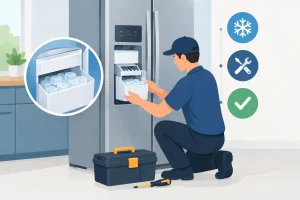
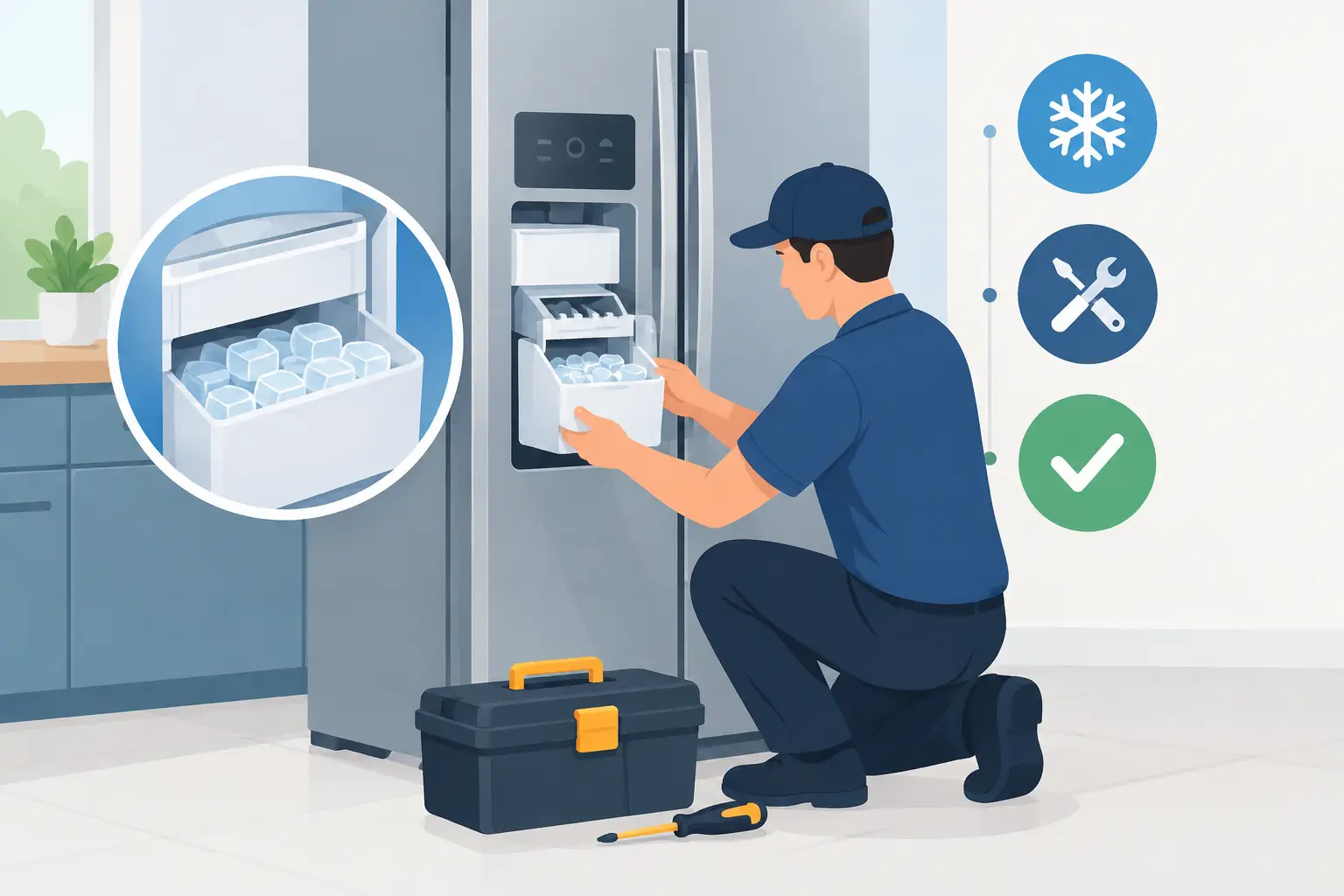
An ice maker that suddenly stops can turn a normal grocery run into a daily inconvenience. Before you try to fix refrigerator ice maker problems yourself, start with the simple checks that solve many no-ice calls: confirm the unit has power, verify water is reaching the refrigerator, and make sure the freezer is cold enough to produce ice.
A refrigerator ice maker is a small system with several parts working together. A blocked water filter, freezer temperature problem, stuck shutoff arm, frozen fill tube, or worn component can all lead to the same result: an empty ice bin. A careful inspection can point you in the right direction without risking a water leak, food spoilage, or damage to the appliance.
Start With the Checks That Cost Nothing
First, look at the ice maker itself. On many models, a wire arm controls production. If that arm is lifted, the ice maker is switched off because it believes the bin is full. Lower it gently and give the unit time to cycle. Some newer refrigerators use an on/off switch or electronic control instead, so check that it has not been turned off accidentally.
Next, check the freezer temperature. Most ice makers need the freezer to stay at or below 5 degrees Fahrenheit, with 0 degrees being the usual target. If the freezer is too warm, the ice maker may stop cycling even when the rest of the refrigerator seems reasonably cool. Avoid judging temperature by touch alone. A simple freezer thermometer gives a more reliable answer.
Also make sure the door closes fully. A package, warped door gasket, or drawer that is not seated correctly can let warm air in. That extra moisture creates frost and can interfere with the ice maker, air circulation, and freezer performance.
Give a recently installed refrigerator or a newly activated ice maker adequate time. It may take 12 to 24 hours before the first batch of ice drops, and a full bin can take longer. Repeatedly opening the freezer door during that period slows production.
Check the Water Supply Before You Fix a Refrigerator Ice Maker
No ice often means no water. Start with the refrigerator water dispenser, if your model has one. If the dispenser has weak flow or no flow, the issue may be a closed supply valve, kinked water line, clogged filter, or inadequate water pressure rather than the ice maker assembly.
Pull the refrigerator forward only if you can do so safely without straining the water line or power cord. Look for a sharply bent or pinched line behind the unit. Then confirm the household water shutoff valve is fully open. If you find water on the floor or around the connection, stop there. Shut off the water supply and arrange repair rather than tightening fittings at random.
A clogged water filter is another common cause. Follow the manufacturer’s instructions for the correct replacement filter and reset procedure. Not every refrigerator uses the same filter, and an improperly installed filter can restrict water flow just as much as an old one. If the filter was recently changed, remove and reinstall it carefully to make sure it is seated.
If the dispenser works normally but the ice maker does not fill, the problem may be more specific. The fill tube that sends water into the ice mold can freeze shut, or the inlet valve that controls water flow may be failing. Those repairs require correct diagnosis because replacing an ice maker alone will not correct a frozen tube or weak valve.
Look for a Frozen Fill Tube
A frozen fill tube is often visible as ice near the back or top of the ice maker. It can happen when the inlet valve drips after a fill cycle, allowing water to freeze inside the tube. It can also result from temperature issues.
Do not chip at the ice with a knife, screwdriver, or other sharp object. Plastic tubing, refrigerator liners, and hidden wiring are easy to damage. You may be able to thaw a clearly accessible blockage by unplugging the refrigerator and allowing the freezer to warm with towels in place for moisture. However, if the tube freezes again, the underlying cause still needs attention.
Inspect the Ice Maker for Jams and Frost
Open the ice bin and look for cubes fused into a solid mass. This usually happens when the bin sits unused for a long period or when warm air reaches the cubes. Empty the bin, discard old ice, and wash and dry it completely before reinstalling it.
Then check for a jam in the ice mold or ejector fingers. A cube that has not released can stop the next cycle. If the ice maker has a removable bin or tray, make sure it is positioned properly. Do not force moving parts or manually rotate an ejector mechanism unless the owner’s manual specifically instructs you to do so.
Heavy frost around the ice maker points to a broader freezer problem. A door seal issue, defrost failure, blocked air vent, or malfunctioning fan can affect both ice production and food preservation. In that situation, focusing only on the ice maker can delay the repair your refrigerator actually needs.
When Resetting May Help
Some electronic ice makers have a test or reset button. A reset can be useful after a power outage, filter replacement, or minor control interruption. The location and reset sequence vary by model, so use the refrigerator’s manual rather than pressing buttons at random.
After a proper reset, listen for the ice maker to move through its cycle. Depending on the model, you may hear a motor turn, a brief water fill, or ice ejecting. If there is no response after the freezer has reached the correct temperature and the water supply is confirmed, a failed ice maker motor, control board, sensor, or valve becomes more likely.
Resetting is not a cure for a mechanical or water-supply failure. If it works once but the problem returns, that pattern is useful diagnostic information. It often means a component is beginning to fail rather than a one-time setting issue.
When to Call for Refrigerator Ice Maker Repair
A service call is the safer choice when you see leaking water, recurring frozen fill tubes, electrical concerns, significant frost buildup, or a refrigerator that is not maintaining temperature. Call for help as well if the water dispenser works but the ice maker never fills, or if replacing a filter and checking settings did not restore operation.
Ice makers are sometimes replaced as complete assemblies, but that is not always the right repair. The problem could be a water inlet valve, door switch, thermostat, sensor, wiring connection, main control board, or freezer airflow issue. Accurate diagnosis protects you from paying for a part that does not solve the problem.
For homeowners, renters, landlords, and property managers in Mountain View and nearby communities, Your Appliance Repair can inspect the full refrigeration system, explain the cause clearly, and provide pricing before any work begins. We will not perform repairs without your prior approval, and there are no hidden charges. Manufacturer-recommended replacement parts and guaranteed labor help protect the repair after the technician leaves.
A Few Habits That Help Keep Ice Flowing
Keep freezer vents clear, close the door firmly, and replace water filters on the schedule recommended for your refrigerator and household water conditions. If you use ice infrequently, empty the bin occasionally so old cubes do not clump and interfere with the mechanism.
Most importantly, pay attention when ice production slows instead of waiting for it to stop completely. A few small cubes, hollow cubes, slow dispensing, or new frost near the ice maker can be an early warning that water flow or freezer temperature needs attention. Addressing that change early can help keep a minor refrigerator issue from becoming a leak, a food-loss problem, or a larger repair.