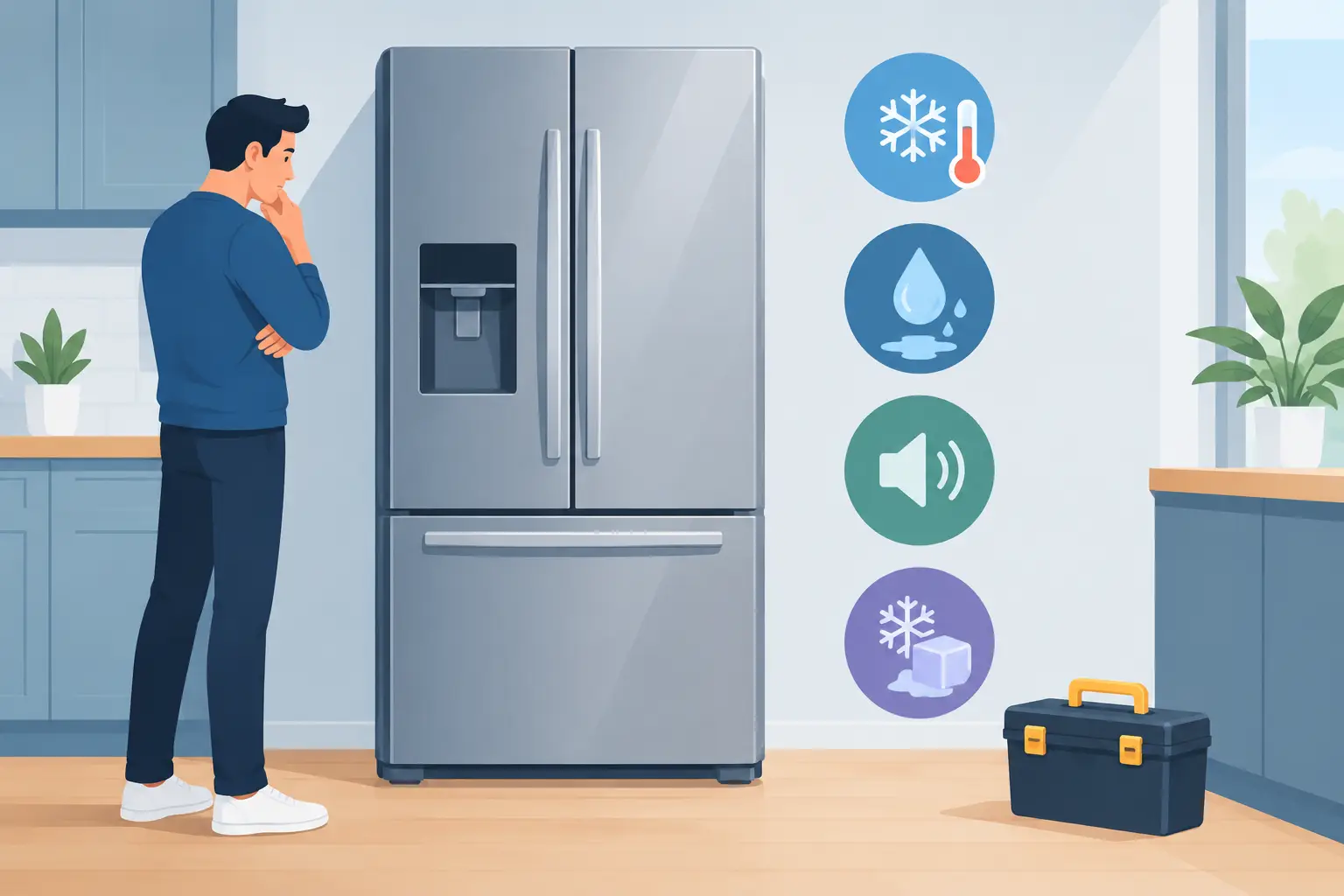
A refrigerator that is not cooling properly can turn a normal afternoon into a race to save groceries. Other refrigerator problems start more quietly: a puddle near the door, a freezer covered in frost, a motor that suddenly sounds louder, or food that seems to spoil before its date. The right response depends on the symptom, but a few safe checks can help you protect your food and know when it is time for a professional repair.
Start With Food Safety, Not the Appliance
If the refrigerator is warm, keep both doors closed as much as possible. An unopened refrigerator generally keeps food cold for about four hours during a power outage, while a full freezer can hold its temperature longer. Those estimates change when doors are opened repeatedly, the kitchen is hot, or the appliance was already struggling to cool.
Move highly perishable foods to a cooler with ice if you have one. Meat, poultry, seafood, milk, eggs, leftovers, and cut produce should not sit above 40 degrees Fahrenheit for more than two hours. When in doubt, discard food that may have spent too long in the temperature danger zone. A repair can restore the appliance, but it cannot make unsafe food safe again.
Before checking anything else, make sure the refrigerator is plugged in and that the outlet has power. Check whether a tripped breaker or a switched outlet is the real cause. These simple checks take a moment and can prevent an unnecessary service call.
Refrigerator Problems That Need Attention
The Refrigerator Is Warm but the Freezer Is Cold
When the freezer is cold but the fresh-food compartment is warm, cold air may not be moving where it needs to go. A blocked air vent, a failed evaporator fan, frost buildup behind the freezer panel, or a faulty damper can all cause this issue.
Start by making sure food packages are not pressed against interior vents. Refrigerators need open space for air to circulate. Avoid packing shelves so tightly that cold air cannot reach the lower shelves, drawers, or rear of the compartment.
If rearranging food does not help, the problem may be inside the airflow or defrost system. Repeatedly thawing the unit with a hair dryer or sharp object is not a good fix. Heat can damage plastic liners and wiring, while scraping frost can puncture a refrigerant line. This type of problem is best diagnosed by a trained technician.
The Refrigerator Is Not Cooling at All
A refrigerator that is completely warm may have a power issue, a failed compressor start component, a control problem, dirty condenser coils, or a sealed-system failure. The refrigerator light turning on does not prove that the cooling system is working.
Check the temperature settings first. The refrigerator section should generally be set near 37 degrees Fahrenheit, and the freezer near 0 degrees. If settings are correct, listen for signs of operation. You may hear a low compressor hum, an occasional fan sound, or clicking. Repeated clicking without cooling can point to a component that needs service.
Dusty condenser coils can also make a refrigerator work harder and cool less effectively. If the coils are accessible and you can safely reach them, unplug the appliance and carefully vacuum loose dust with a brush attachment. Not every refrigerator has exposed coils, and built-in models may require more involved access. If cleaning does not restore cooling within several hours, schedule a diagnosis rather than waiting for a complete failure.
Water Is Leaking Onto the Floor
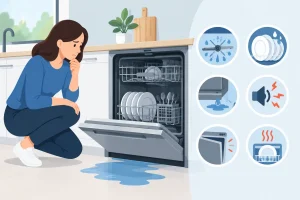
A puddle does not always mean a major refrigeration failure, but it should not be ignored. Water can damage flooring, create a slip hazard, and lead to mold around cabinets or walls.
Check whether the water filter was recently changed. A filter that is loose, incorrectly installed, or missing an O-ring can leak inside the refrigerator or near the base. If the appliance has an ice maker or water dispenser, inspect the visible water line for obvious kinks or drips.
Another common cause is a clogged defrost drain. During normal operation, defrost water should flow through a drain tube into a pan beneath the refrigerator. When that drain is blocked, water can collect under crisper drawers or leak onto the floor. Door gasket problems can also cause excess condensation. A technician can identify the source without guessing and address the underlying issue rather than simply cleaning up the water.
Frost Is Building Up in the Freezer
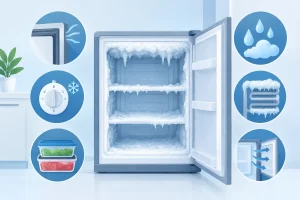
A thin layer of frost can happen after the door has been left open, but thick ice on freezer walls, shelves, or food packages usually signals a problem. Warm, humid air may be entering through a damaged or dirty door gasket. In other cases, the automatic defrost system is not clearing frost from the evaporator coil.
Look closely at the door seal. Wipe away crumbs, sticky spills, or debris that prevents the gasket from closing evenly. Check whether a bin or large package is stopping the door from fully shutting. You can also close the door on a strip of paper in several locations. If the paper slides out with almost no resistance, the seal may not be making proper contact.
A gasket may be cleaned or replaced, depending on its condition. Frost that returns quickly after a manual defrost often points to a failed defrost heater, sensor, timer, or control board. That is not a problem to solve by repeatedly unplugging the refrigerator every few weeks.
The Refrigerator Is Making Unusual Noises
Refrigerators make normal operating sounds. You may hear a brief hum, a fan, water dripping during defrost, or ice dropping into the bin. A new noise is worth attention when it is loud, constant, or paired with poor cooling.
A rattling sound can be as simple as the refrigerator touching a wall, an uneven floor, or a loose item on top. Pull the unit slightly away from the wall and make sure it is level. A buzzing or grinding sound may come from a fan motor, while a repeated clicking sound can be related to a start relay or control issue.
Do not assume every sound means the compressor has failed. Compressor repairs can be more costly than other refrigerator repairs, and an accurate diagnosis matters before approving any work. The best decision depends on the appliance’s age, condition, repair history, and the specific failed part.
The Ice Maker or Water Dispenser Has Stopped Working
Ice maker problems often come down to water supply, temperature, or a failed component. Make sure the freezer is cold enough, the water shutoff valve is open, and the dispenser lock is not activated. If ice cubes are small or hollow, a restricted water filter or low water pressure may be involved.
Replace filters on the schedule recommended for your model, and use the correct approved filter. An off-brand or poorly fitted filter can cause slow flow, leaks, or dispensing issues. If the ice maker is not filling, is overflowing, or is producing no ice despite a cold freezer, a service diagnosis can determine whether the issue is the inlet valve, fill tube, ice maker assembly, or electronic control.
When to Call for Refrigerator Repair
Call for service promptly if the refrigerator is warm, the freezer is thawing, a leak keeps returning, frost is building up repeatedly, or the appliance is tripping a breaker. You should also arrange repair when you smell burning, see damaged wiring, or hear loud clicking accompanied by no cooling. Turn off power to the appliance if there is a burning smell or visible electrical damage.
For homeowners, renters, landlords, and property managers in Mountain View and nearby communities, fast answers matter because a refrigerator failure affects food, schedules, and tenants. A qualified technician should explain what failed, provide the repair cost before work begins, and use manufacturer-recommended parts when replacement is needed. No hidden charges and no repairs without prior approval should be standard.
Your Appliance Repair approaches refrigerator service with that level of accountability. Clean, on-time technicians diagnose the issue, explain the recommended repair, and stand behind completed work with labor and parts protection.
A refrigerator does not need to be completely dead before it deserves attention. Acting when cooling changes, water appears, or frost returns can protect your groceries and may prevent a smaller problem from becoming a more disruptive repair.