A dishwasher that suddenly goes dark in the middle of a cycle can turn an ordinary weeknight into a cleanup problem. Before assuming the appliance has failed, learn how to reset a tripped dishwasher safely. A tripped breaker, a popped GFCI outlet, or a temporary electronic fault can often be addressed without taking the dishwasher apart. The key is knowing when a simple reset is appropriate and when the power loss points to a problem that needs qualified repair.
Start With Safety, Not the Reset Button
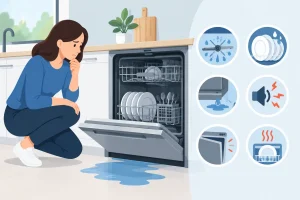
Do not reset anything while water is leaking from the dishwasher, the floor is wet near the electrical connection, or you smell burning plastic. Leave the dishwasher off and avoid touching the plug, outlet, or electrical panel if your hands or the area are wet.
A circuit breaker trips to protect your home from an electrical overload, short circuit, or ground fault. Resetting it once after checking the area is reasonable. Repeatedly forcing a breaker back on is not a fix. It can allow a wiring issue, failing component, or damaged cord to become more serious.
If the dishwasher has just finished a cycle and will not respond, give it a minute before troubleshooting. Some models pause briefly while draining or after a power interruption. If the display is blank and the controls do nothing, begin by confirming that the appliance is receiving power.
How to Reset a Tripped Dishwasher at the Breaker
Most built-in dishwashers do not have a separate reset button that restores household power. The reset usually happens at the electrical panel or through the outlet serving the appliance.
First, turn the dishwasher control off. Open the door and press Cancel or Drain if the panel is still responsive. Close and latch the door when finished.
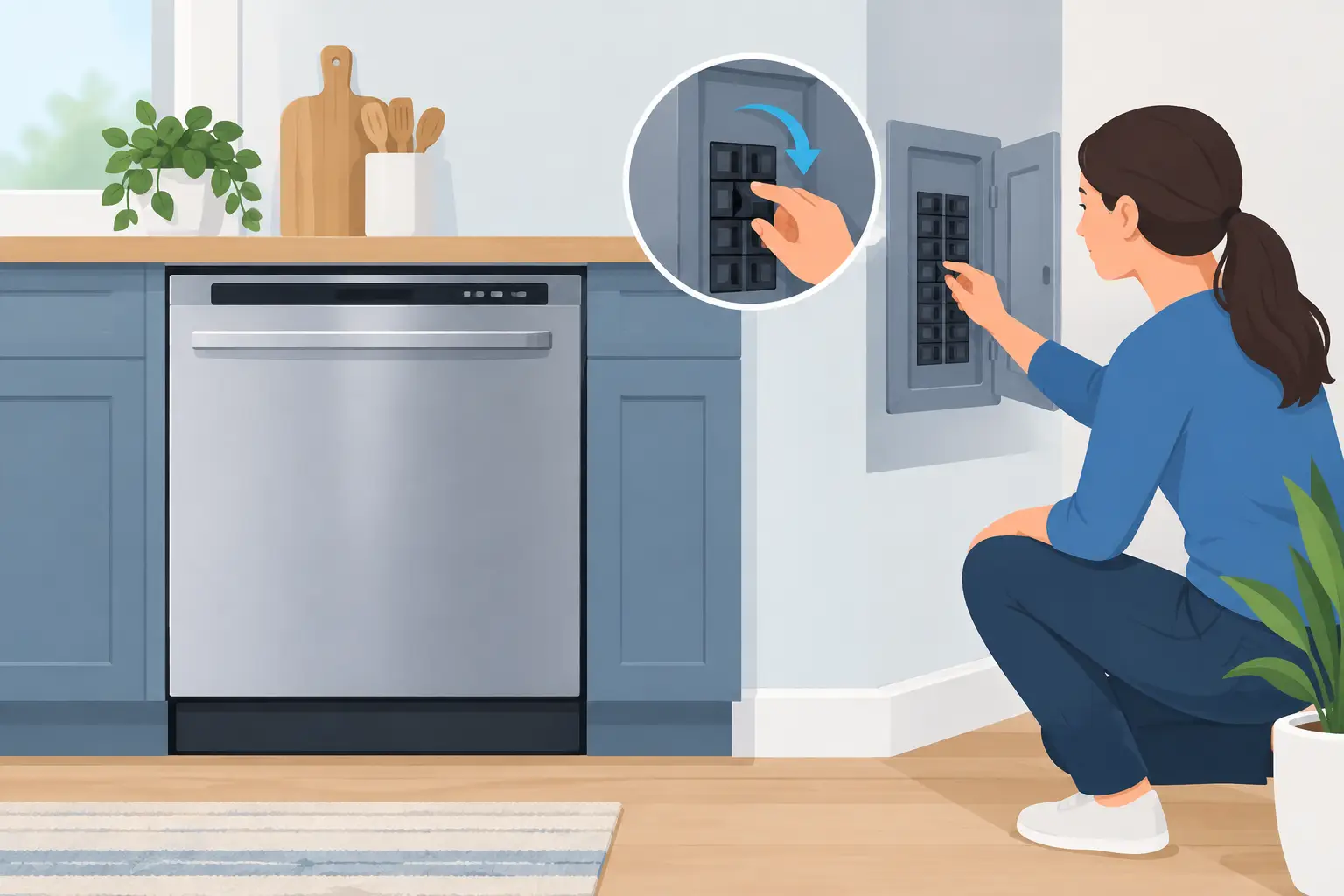
Next, go to your home’s electrical panel and look for the breaker labeled dishwasher, kitchen, disposal, or appliances. A tripped breaker may sit in the middle position rather than fully in the off position. Move it firmly all the way to OFF first, then move it back to ON. If the breaker does not stay on, do not keep trying to reset it.
Return to the dishwasher and check for power. Depending on the model, you may need to press Power, Start, or select a new cycle. Many dishwashers will not begin until the door is completely latched.
If the breaker was not tripped, do not switch random breakers off and on. You could interrupt a refrigerator, internet equipment, medical device, or another essential appliance without learning anything useful about the dishwasher.
Check for a Tripped GFCI Outlet
In some homes, the dishwasher is plugged into an outlet beneath the kitchen sink or connected to a nearby GFCI-protected circuit. A GFCI outlet has TEST and RESET buttons and is designed to shut off power when it detects a ground fault.
Check the outlets under the sink first, especially if the dishwasher shares space with a garbage disposal. Also check nearby kitchen, garage, laundry, or exterior GFCI outlets. One tripped GFCI can sometimes affect another outlet farther away than expected.
Press RESET once on any tripped GFCI outlet. If it clicks into place and the dishwasher powers up, run a short cycle and watch for any signs of leaking or abnormal operation. If the GFCI immediately trips again, leave it off. Moisture, a damaged outlet, a failing dishwasher part, or a wiring problem may be involved.
Reset the Dishwasher Controls After Power Is Restored
If the breaker and outlet are working but the dishwasher display is frozen, a control reset may clear a temporary error. The exact procedure varies by manufacturer, so use the instructions on the control panel or in the owner’s manual when available.
A common approach is to turn the dishwasher off, wait one to five minutes, then restore power and start a new cycle. For a more complete reset, turn off the dishwasher breaker for five minutes, then turn it back on. This allows the electronic control board to fully power down before restarting.
Some models use a Cancel, Start, or Heated Dry button sequence to clear a cycle or error condition. Do not guess at button combinations if the panel is displaying a specific error code. Write down the code before resetting power. It can help identify whether the issue involves filling, draining, heating, door latching, or communication between components.
A reset can clear a momentary control glitch. It does not repair a bad door switch, damaged wiring, failed heating element, worn circulation pump, or control board fault. If the same code or power failure returns, the dishwasher is giving you useful information: there is likely an underlying cause to diagnose.
Check for Simple Problems That Can Mimic a Power Failure
Before scheduling service, look for a few non-electrical issues that can make a dishwasher seem unresponsive. Confirm the door closes fully. A utensil, a swollen rack wheel, or dishes extending beyond the rack can prevent the latch from engaging.
Check that the water supply valve under the sink is open and that the dishwasher has not stopped because of a drain issue. Standing water in the bottom of the tub does not usually trip a breaker, but it may leave the cycle incomplete and make the appliance appear stuck. Clean visible food debris from the filter if your model has an accessible filter, but do not force or disassemble parts that do not come out easily.
If your kitchen recently lost power, check the clock and controls on other appliances. A wider power interruption may have reset the dishwasher’s cycle settings or caused it to enter a delay-start mode. Canceling the delay and selecting a fresh cycle may be all that is needed.
When a Tripped Dishwasher Needs Professional Repair
One isolated trip after a neighborhood outage or a brief overload can happen. A dishwasher that repeatedly trips a breaker, trips a GFCI, shuts off mid-cycle, or produces a burning smell needs more than another reset.
Call for service if you notice any of these conditions:
- The breaker trips again as soon as the dishwasher starts or begins heating.
- The GFCI will not reset or trips when the dishwasher is plugged in.
- Water is leaking beneath the dishwasher or into the cabinet under the sink.
- The power cord, plug, outlet, or wiring looks scorched, loose, or damaged.
- The dishwasher hums, sparks, smells hot, or displays the same error code after a reset.
These symptoms can be caused by a failing motor, heater circuit, pump, wiring connection, door latch, or electronic control. The repair depends on accurate diagnosis. Replacing parts based on a guess can cost more and still leave the original electrical fault unresolved.
For renters, it is usually best to report recurring electrical or appliance problems to the landlord or property manager rather than attempting a repair. Property managers should treat a repeatedly tripping dishwasher circuit as a maintenance priority, especially in occupied homes where a leak or electrical fault could affect cabinets, flooring, and tenant safety.
Prevent Another Dishwasher Power Trip
Keep the area beneath the sink dry and avoid storing cleaning products where they can leak onto an outlet, cord, or dishwasher connection. Run the garbage disposal before starting the dishwasher if both share a drain system, and clean the dishwasher filter regularly according to the manufacturer’s directions. Better drainage reduces strain on the appliance, though it will not correct a true electrical defect.
Avoid using extension cords or power strips for a built-in dishwasher. It should be connected through its proper dedicated electrical setup. If your dishwasher shares a circuit with several countertop appliances, a qualified technician or electrician can determine whether circuit loading is contributing to the trips.
A dishwasher should make life easier, not leave you wondering whether it is safe to turn the power back on. If one careful reset does not solve the problem, Your Appliance Repair can diagnose the cause, explain the recommended repair before work begins, and help restore your kitchen without hidden charges.