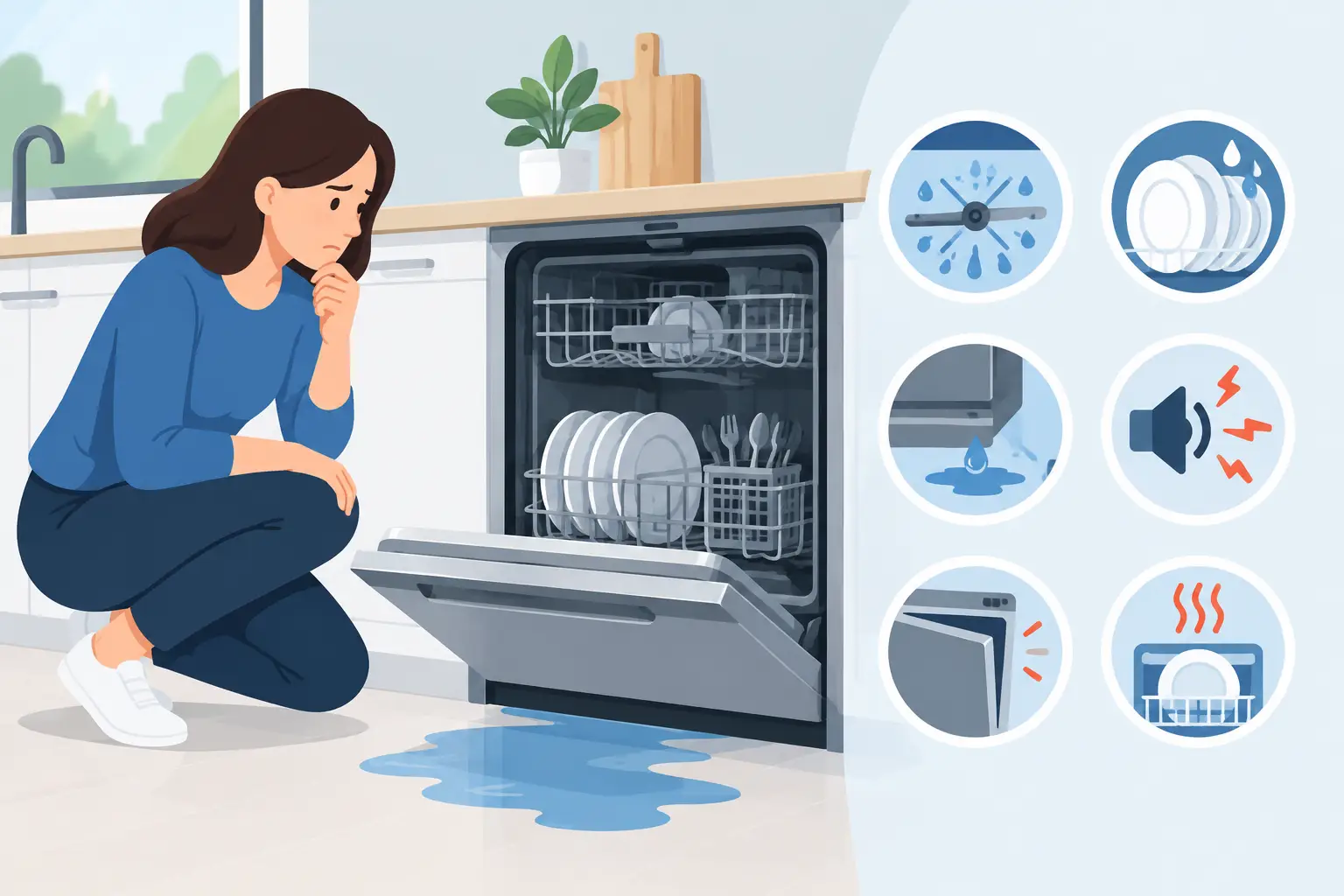
A dishwasher problem rarely starts with a dramatic breakdown. More often, it begins with a faint grinding noise, cloudy glasses that were once spotless, or a small puddle under the door. Knowing the best signs a dishwasher needs repair helps you act before a minor issue turns into water damage, a ruined floor, or a machine that stops in the middle of a busy week.
Some problems are caused by simple loading mistakes or a clogged filter. Others involve the pump, heating system, seals, or electrical controls. The key is noticing what has changed, trying safe basic checks, and calling for qualified help when the appliance is no longer operating as it should.
1. Your Dishes Come Out Dirty or Gritty
If dishes are still covered in food particles after a normal cycle, do not assume the dishwasher has reached the end of its life. Start by checking the filter for debris, making sure the spray arms can spin freely, and confirming that large items are not blocking the detergent dispenser.
When those basic checks do not solve the problem, the cause may be a clogged spray arm, weak circulation pump, failing water inlet valve, or damaged wash motor. A dishwasher needs enough water pressure and proper spray movement to clean effectively. Rewashing every load wastes water, detergent, time, and eventually patience.
Cloudy glassware can be different. Hard-water mineral buildup and incorrect detergent amounts may be responsible. But if glasses suddenly look dirty while the rest of the load does too, it is worth having the dishwasher inspected.
2. Water Stays in the Bottom After a Cycle
A little water around the filter area can be normal, depending on the model. A visible pool of dirty water across the bottom of the tub is not. Standing water usually points to a drainage restriction or a component that is no longer moving water out of the machine.
Check the filter and remove any food debris you can safely reach. Also look at the kitchen sink drain. If the sink is slow or backed up, the dishwasher may be unable to drain properly through the connected plumbing.
If the sink drains normally and water continues to collect in the dishwasher, stop running cycles until the issue is diagnosed. A blocked drain hose, failed drain pump, defective check valve, or obstruction in the air gap may be involved. Continuing to run the appliance can cause an overflow or leave dirty water sitting inside the tub.
3. You See Water Around the Dishwasher
A small puddle is one of the clearest signs to take seriously. Dishwasher leaks can come from a worn door gasket, loose hose connection, cracked tub, damaged pump seal, or too much foam from using the wrong soap. Regular dish soap should never be used in a dishwasher because it creates excessive suds that can push water out of the door.
First, turn off the dishwasher and dry the area so you can tell whether water returns. Check for an obvious cause, such as a dish or utensil preventing the door from closing fully. Do not pull the machine out or disconnect water lines unless you know how to do so safely.
A slow leak is still a leak. Water can travel under cabinets and flooring before it becomes visible, particularly in kitchens with wood, laminate, or engineered flooring. Prompt repair can protect the appliance and the room around it.
4. The Dishwasher Makes New or Loud Noises
Dishwashers make normal operating sounds: water moving, a soft hum, and occasional clicking as controls change stages. What is not normal is a new grinding, squealing, rattling, buzzing, or repeated knocking sound.
A rattle may be as simple as a utensil resting against a spray arm. Rearrange the load and run another cycle. If the sound continues when the dishwasher is empty or lightly loaded, internal parts may be wearing out. A grinding noise can indicate a problem with the pump or motor. A buzzing sound may occur when a drain pump is blocked or failing.
Do not ignore a noise that grows louder from one cycle to the next. Appliances often give warning signs before a part fails completely. Scheduling service while the dishwasher still operates may give you more control over timing and help prevent a more disruptive failure.
5. It Does Not Dry Dishes Like It Used To
Plastic containers may remain damp even in a properly working dishwasher. That is common. But if plates, glasses, and metal utensils all come out cold and wet after every cycle, the dishwasher may not be heating properly.
Drying performance depends on several factors, including the selected cycle, rinse aid level, water temperature entering the dishwasher, and how items are loaded. Try refilling rinse aid and selecting a heated dry option if your model has one. Avoid nesting bowls or cups that collect water.
If the dishwasher also leaves food behind or feels cool near the end of a cycle, a failed heating element, thermostat, temperature sensor, or control issue may be the cause. This is not a repair to guess at. Electrical and heated components should be tested correctly before replacement parts are approved.
6. The Door Will Not Latch, Open, or Stay Closed
A dishwasher cannot run safely if the door latch does not engage. You may notice that the cycle will not start, the machine stops unexpectedly, or you need to push on the door to keep it running. These are not issues to work around with pressure, tape, or makeshift fixes.
Sometimes a rack has been installed incorrectly or a tall item is blocking the door. If nothing is obstructing it, the latch assembly, strike plate, hinges, or door springs may need attention. A faulty door switch can also prevent the control from recognizing that the door is closed.
Because the latch works with both water containment and electrical operation, professional diagnosis is the sensible choice. A repaired latch should close securely and allow the door to open normally when the cycle is complete.
7. It Has No Power or Stops Mid-Cycle
Before assuming the dishwasher has failed, check whether the control lock is activated, the circuit breaker has tripped, or the outlet is working. If your dishwasher is hardwired, do not attempt electrical repairs yourself. Reset a tripped breaker once. If it trips again, leave it off and arrange service.
A dishwasher that starts and then stops can have a range of causes. A float switch may be stuck, a sensor may be reading incorrectly, the control board may be malfunctioning, or a motor may be overheating. Error codes can offer a helpful clue, but they are not always a complete diagnosis.
Repeated resets are not a fix. If the appliance loses power, trips a breaker, smells hot, or shows signs of burning, stop using it immediately. Those symptoms call for prompt professional attention.
When Repair Makes More Sense Than Replacement
Age matters, but it is only one part of the decision. Many dishwashers can provide years of reliable service after a pump, valve, seal, heating component, or latch is replaced. Repair often makes sense when the rest of the machine is in good condition and the issue is isolated.
Replacement may be worth considering if the dishwasher has frequent unrelated failures, a cracked tub, major corrosion, or a repair cost that is too close to the cost of a comparable new model. A clear diagnosis lets you make that choice with real information rather than frustration.
For homeowners, renters, landlords, and property managers in Mountain View and nearby communities, Your Appliance Repair can identify the cause, explain the recommended repair, and provide pricing before work begins. No repair should be performed without your approval, and no one should be surprised by hidden charges.
A dishwasher does not need to flood the kitchen to deserve attention. If it is leaking, draining poorly, cleaning badly, making unfamiliar noises, or shutting down mid-cycle, acting early is usually the cleanest and least stressful path forward.