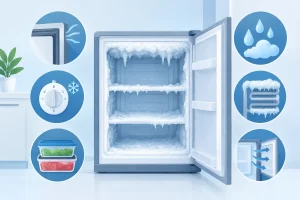
A thin layer of frost after you leave the freezer door open for a moment is normal. Thick, recurring frost that covers food packages, shelves, or the back wall is not. If you are asking what causes freezer frost buildup, the short answer is warm, humid air entering the freezer or a defrost system that is not doing its job.
Frost takes up valuable storage space, makes it harder to find food, and can keep the freezer from holding a steady temperature. It may also force the refrigerator to run longer than it should. Some causes are simple enough to correct at home. Others point to a part that needs professional diagnosis and repair.
What Causes Freezer Frost Buildup?
Freezers remove heat from the air inside the compartment. When moist household air enters, that moisture condenses on the cold evaporator coils and quickly freezes. A properly working frost-free freezer periodically melts this frost during an automatic defrost cycle.
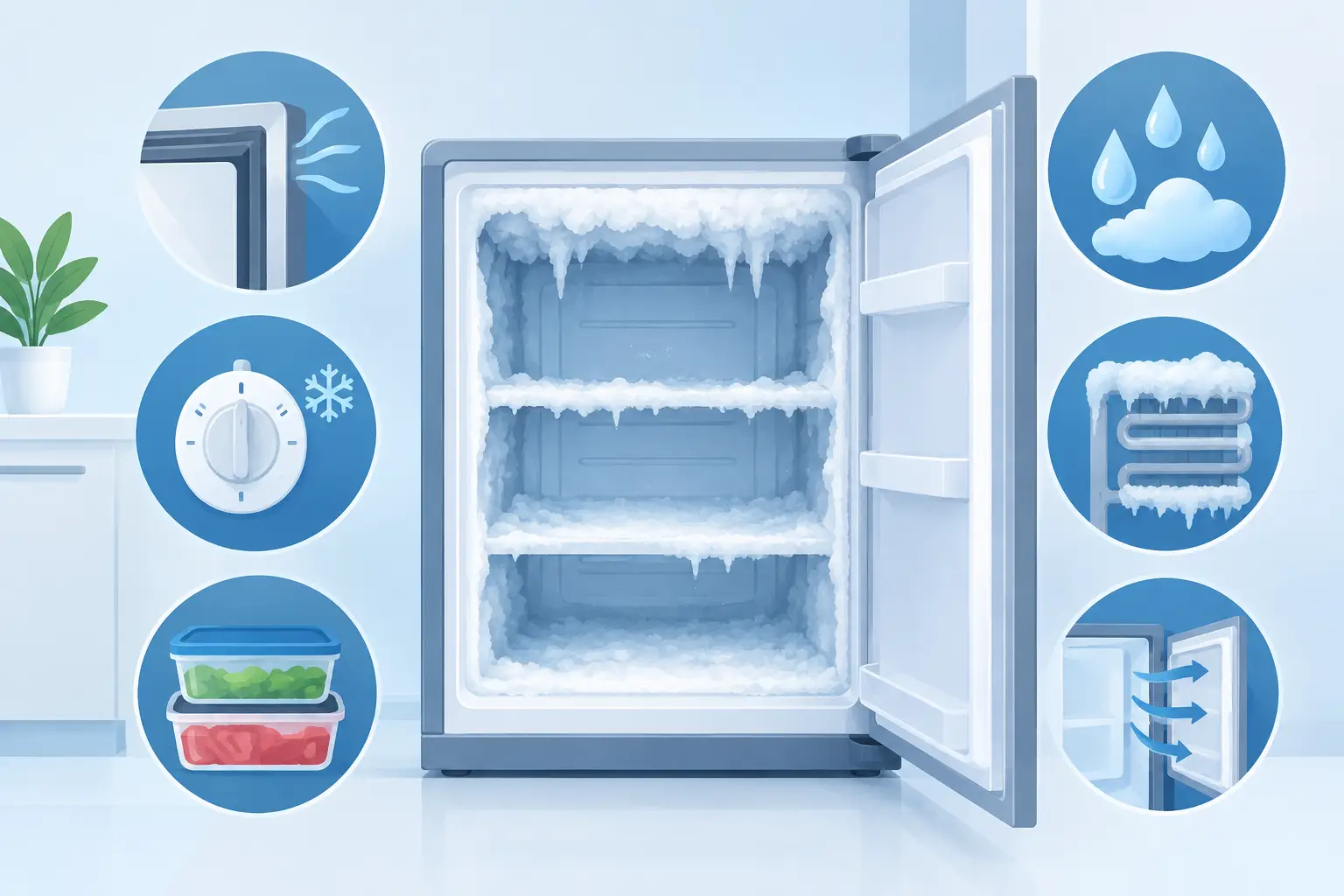
When humid air keeps getting in or the defrost cycle fails, frost accumulates faster than the appliance can clear it. The pattern of the frost often offers a useful clue. Frost concentrated near the door usually suggests an air leak. Heavy frost across the rear interior panel often suggests a defrost problem behind that panel.
1. The Freezer Door Is Not Sealing Completely
A door left slightly open is one of the most common reasons for freezer frost. A large food package, an overfilled drawer, or a shelf that is not seated properly can keep the door from closing all the way. Even a small gap lets humid kitchen air enter over and over again.
Check whether bags, boxes, or ice trays are extending beyond the shelf line. Close the door and look for an even gap around its edges. If the door has to be pushed firmly to latch, something may be obstructing it or the door may be out of alignment.
Avoid forcing a loaded door shut. That can damage bins, hinges, or the gasket and make the problem worse.
2. A Dirty, Torn, or Worn Door Gasket
The rubber seal around the freezer door is called a gasket. It creates the airtight barrier that keeps warm air out. Crumbs, spills, grease, pet hair, or a sticky residue can prevent the gasket from making full contact with the cabinet.
Clean the gasket gently with warm water, mild soap, and a soft cloth, then dry it thoroughly. Look for cracks, flattened sections, tears, or corners that pull away from the door. A damaged gasket should be replaced rather than patched, especially if frost returns soon after cleaning.
A simple check can help: close the door on a strip of paper and pull gently. There should be resistance around the full perimeter. If the paper slides out easily in one area, the seal may be leaking there. This test is only a clue, though. Door alignment and gasket condition both affect the result.
3. The Door Is Being Opened Too Often or Too Long
Every time the freezer door opens, moisture comes in with the room air. In a busy household, repeated searching for food, holding the door open while unloading groceries, or allowing children to stand with the door open can create noticeable frost over time.
This is more likely during humid weather and in homes where the refrigerator is near a cooktop, dishwasher, or other source of heat and moisture. It does not mean you need to avoid using your freezer. It means a few habits can make a difference: decide what you need before opening the door, organize items so they are easy to reach, and make sure the door closes after each use.
4. Hot or Uncovered Food Is Going Into the Freezer
Warm food releases steam as it cools. Put that food into a freezer uncovered, and the moisture has nowhere to go except onto cold surfaces. This can create frost quickly, particularly near vents and the rear wall.
Allow leftovers to cool reasonably before freezing them, but do not leave perishable food at room temperature for extended periods. Use airtight containers or freezer bags, remove excess air from bags, and dry the outside of containers before storing them. Proper packaging protects food quality as well as the freezer itself.
5. The Automatic Defrost System Has Failed
Most modern refrigerators use an automatic defrost system. Depending on the model, it includes a defrost heater, defrost thermostat or sensor, control board or timer, and wiring. When these parts work together, they melt normal frost from the evaporator coils at scheduled intervals.
If one component fails, ice can build up behind the back wall of the freezer. You may first notice poor airflow, warmer freezer temperatures, food that seems softer than usual, or a refrigerator section that is not cold enough. Eventually, the evaporator can become so iced over that cold air cannot circulate properly.
This is not usually a do-it-yourself repair. Accessing components may require removing interior panels, testing electrical parts, and safely handling sharp edges and delicate wiring. Repeatedly thawing the appliance may restore cooling for a short time, but it will not fix a failed heater, sensor, or control.
6. A Clogged or Frozen Defrost Drain Is Holding Water
During a defrost cycle, melted frost should flow through a drain channel and tube to a pan underneath the refrigerator. If that drain is blocked by food debris, ice, or residue, water can pool inside the freezer and refreeze.
You may see a sheet of ice on the freezer floor, ice beneath the lower basket, or water that later appears under the refrigerator. A blocked drain can happen alongside a defrost issue, but it can also occur on its own.
Do not chip at ice with a knife, screwdriver, or other sharp tool. One slip can puncture an interior liner or refrigerant line and turn a repairable problem into a much larger expense. A technician can clear the drain correctly and check why it froze in the first place.
7. Temperature, Airflow, or Installation Problems
Freezer temperature matters. For most homes, 0 degrees Fahrenheit is the recommended setting. Setting the freezer much colder does not preserve food better, but it can increase frost and make the appliance work harder. A setting that is too warm can also create trouble if food begins thawing and releasing moisture.
Airflow is just as important. Do not pack food tightly against interior vents or the rear wall. Cold air needs room to circulate. Overloading can trap moisture and contribute to uneven temperatures, while an almost empty freezer can lose cold air quickly each time the door opens. A reasonably full, organized freezer generally performs best.
Installation conditions can play a role as well. A refrigerator that is not level may have door-closing issues. An appliance in a very hot garage or enclosed space may struggle to maintain temperature. These situations do not always cause frost by themselves, but they can expose a weak gasket, failing fan, or defrost problem sooner.
When Frost Means It Is Time for Refrigerator Repair
A full manual defrost can remove existing frost, but it should not be your regular solution. If frost reappears within days or a few weeks, there is likely an underlying cause that needs attention.
Schedule service if the freezer has thick frost on the back panel, the refrigerator compartment is warming up, the unit runs constantly, the door will not stay closed, or you see water and ice collecting on the freezer floor. These symptoms can affect food safety and may place extra strain on the compressor.
For homeowners and property managers in Mountain View and nearby communities, Your Appliance Repair can diagnose the source of recurring freezer frost and explain the recommended repair before work begins. We will not perform repairs without your prior approval, and there are no hidden charges.
Start with the simple checks: clear anything blocking the door, clean the gasket, confirm the temperature setting, and make sure vents are open. If the frost keeps returning, acting early can protect your food, reduce wasted energy, and help prevent a small refrigerator problem from becoming a larger interruption.