
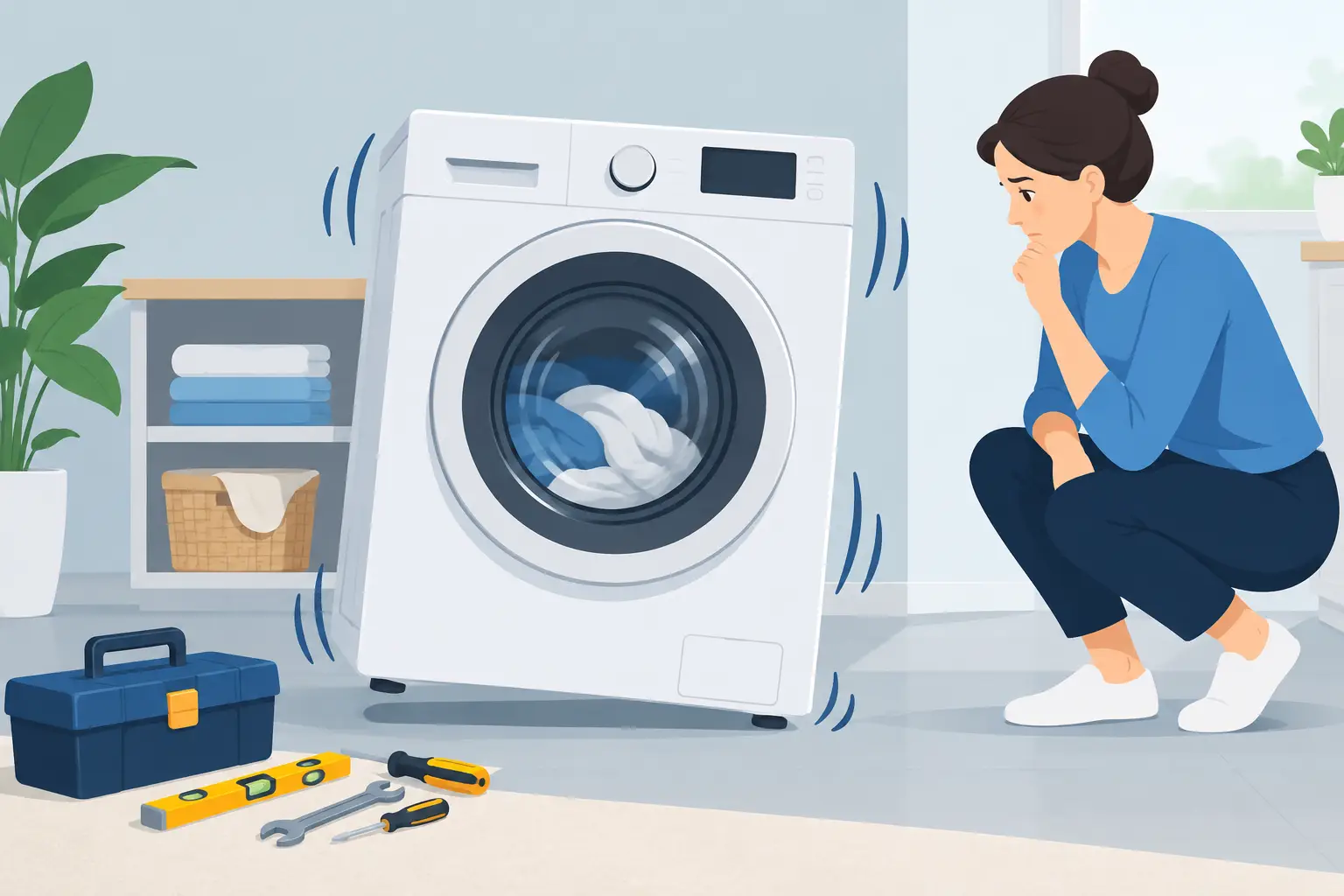
A washer that starts walking across the laundry room, banging against the wall, or thumping hard during spin is more than an annoyance. If you are asking, why is my washer shaking, the machine may simply be dealing with an unbalanced load, or it may be signaling a leveling, suspension, or installation problem that should be corrected before it damages the appliance or your floor.
A little vibration is normal during a high-speed spin cycle. Violent shaking, repeated banging, movement across the floor, or a cycle that stops with an error code is not. Stop the washer, wait until the drum has fully stopped, and check the simple causes first. Do not keep restarting a machine that is pounding or moving. That can turn a manageable repair into a larger one.
Why Is My Washer Shaking During the Spin Cycle?
The spin cycle is when the washer reaches its highest speed and puts the most force on the cabinet, tub, and floor. Water is being pulled from clothing quickly, so even a small imbalance can become noticeable. The cause often comes down to the load, the washer’s footing, or parts that keep the tub stable.
An uneven or overloaded load
This is the most common reason for sudden shaking. Heavy items such as bath mats, blankets, comforters, shoes, or a single towel can gather on one side of the drum. When that happens, the washer cannot distribute the weight evenly as it spins.
Pause the cycle if your washer allows it, then redistribute the items around the drum. For a bulky item, add a few similar lightweight items to help balance the load, but do not pack the tub tightly. A washer needs room for clothing to move and rebalance itself.
Overloading can create the same problem. If laundry is stuffed into the drum or a large blanket is too heavy for the washer’s capacity, the machine may shake, knock, or refuse to spin properly. One smaller load is easier on the washer than repeatedly forcing an oversized one through a cycle.
The washer is not level
All four feet need solid contact with the floor. If one foot is slightly raised, loose, or resting on an uneven surface, the washer can rock during spin and amplify normal vibration into a loud thud.
With the machine off, press down gently on opposite corners of the cabinet. It should not rock. If it does, the leveling feet may need adjustment and the locking nuts may need to be secured afterward. This sounds simple, but proper leveling matters. A washer that is only slightly off level can shake dramatically at full spin speed.
Be careful when moving a washer or reaching behind it. It is heavy, and water lines, drain hoses, and power cords can be damaged if the appliance is pulled too far or tipped carelessly.
The floor is flexing or uneven
A correctly leveled washer can still shake if the floor beneath it is weak, sloped, or flexible. This is especially common in upstairs laundry areas, older homes, and spaces with uneven flooring. Front-load washers may make this more noticeable because their spin speeds are often higher.
A vibration pad can sometimes reduce minor vibration and protect flooring, but it will not repair a failing suspension system or correct a seriously unstable floor. Pads are helpful only after the washer is level and the underlying cause has been addressed.
Shipping bolts were left in a new washer
If a new front-load washer has shaken badly from its first load, check whether the shipping bolts were removed during installation. These bolts hold the tub in place for transportation. They must be removed before normal operation.
Running the washer with shipping bolts installed can cause severe vibration and may damage internal components. If you are unsure whether they were removed, consult the installation instructions or have a qualified technician inspect the setup rather than guessing.
Internal Washer Problems That Cause Shaking
If the load is balanced and the washer is stable on the floor, the problem may be inside the appliance. These issues often get worse over time, and continuing to use the washer can put stress on other parts.
Worn suspension rods, shocks, or springs
Top-load washers commonly use suspension rods or springs to support the tub. Many front-load models use shock absorbers. These components control tub movement while the washer spins.
When they wear out, the tub may bounce excessively, hit the cabinet, or cause the washer to walk forward. You may also notice that the machine shakes even with a normal, evenly distributed load. Replacing worn suspension parts requires the correct parts for the specific model and proper installation, since the tub assembly is heavy and under tension.
Loose or damaged counterweights
Many washers use heavy concrete or metal counterweights to keep the tub stable. If a counterweight loosens, cracks, or shifts, the washer may produce a deep knocking sound and shake hard during spin.
This is not a repair to ignore. A loose counterweight can damage the tub, cabinet, or nearby components. Turn the washer off and arrange service if you hear repeated heavy knocking that does not improve after balancing the load.
Worn drum bearings or a damaged tub support
A loud rumbling, grinding, or roaring sound during spin can point to failing bearings. In some washers, a damaged tub support or spider arm can create similar symptoms. These are more involved repairs because the washer often needs significant disassembly to reach the affected parts.
Bearing trouble does not always begin with violent shaking. It may start as extra noise, a rough-feeling drum, rust-colored marks under the washer, or a drum that has more play than it should. Early diagnosis can help you make an informed decision about repair before the problem spreads.
A damaged drive component
A loose pulley, worn belt, failing motor coupling, or other drive-system problem may make the washer bang, vibrate, or stop mid-spin. These symptoms can overlap with suspension problems, which is why diagnosis matters. Replacing parts based on a guess can cost more and still leave the original problem unresolved.
Safe Checks Before You Schedule Washer Repair
Before checking anything, unplug the washer. If you need to move it, turn off the water supply as well. Look for obvious signs such as a loose leveling foot, a washer that rocks, an overloaded drum, or an item trapped between the inner basket and outer tub.
Then run one small, balanced load. If the shaking disappears, the issue was likely the load itself. If it returns with a normal load, do not keep testing it through several high-speed cycles. Repeated pounding can loosen hoses, damage flooring, and increase strain on the tub and motor.
Pay attention to when the shaking happens. Shaking only with bulky loads suggests a balancing issue. Shaking with every load, especially alongside banging or grinding, points more strongly to leveling or internal component trouble. Notes about the noise, cycle stage, and any error code can help a technician diagnose the problem efficiently.
When a Shaking Washer Needs Professional Service
Call for service if your washer moves across the floor, repeatedly strikes the wall or cabinet, makes a grinding or metal-on-metal sound, leaks, smells hot, or will not complete a spin cycle. These signs can indicate worn suspension components, a bearing problem, a loose counterweight, or an installation issue that needs more than a quick adjustment.
For homeowners and property managers in Mountain View, Palo Alto, Sunnyvale, San Jose, and nearby communities, Your Appliance Repair can inspect the source of the vibration and explain the recommended repair before work begins. We will not perform repairs without your prior approval, and there are no hidden charges.
A shaking washer does not always mean the appliance is at the end of its life. Often, the right adjustment or properly installed replacement part can restore a quiet, stable spin cycle. The key is to stop the hard shaking early and address the real cause before your next laundry day becomes a repair emergency.