
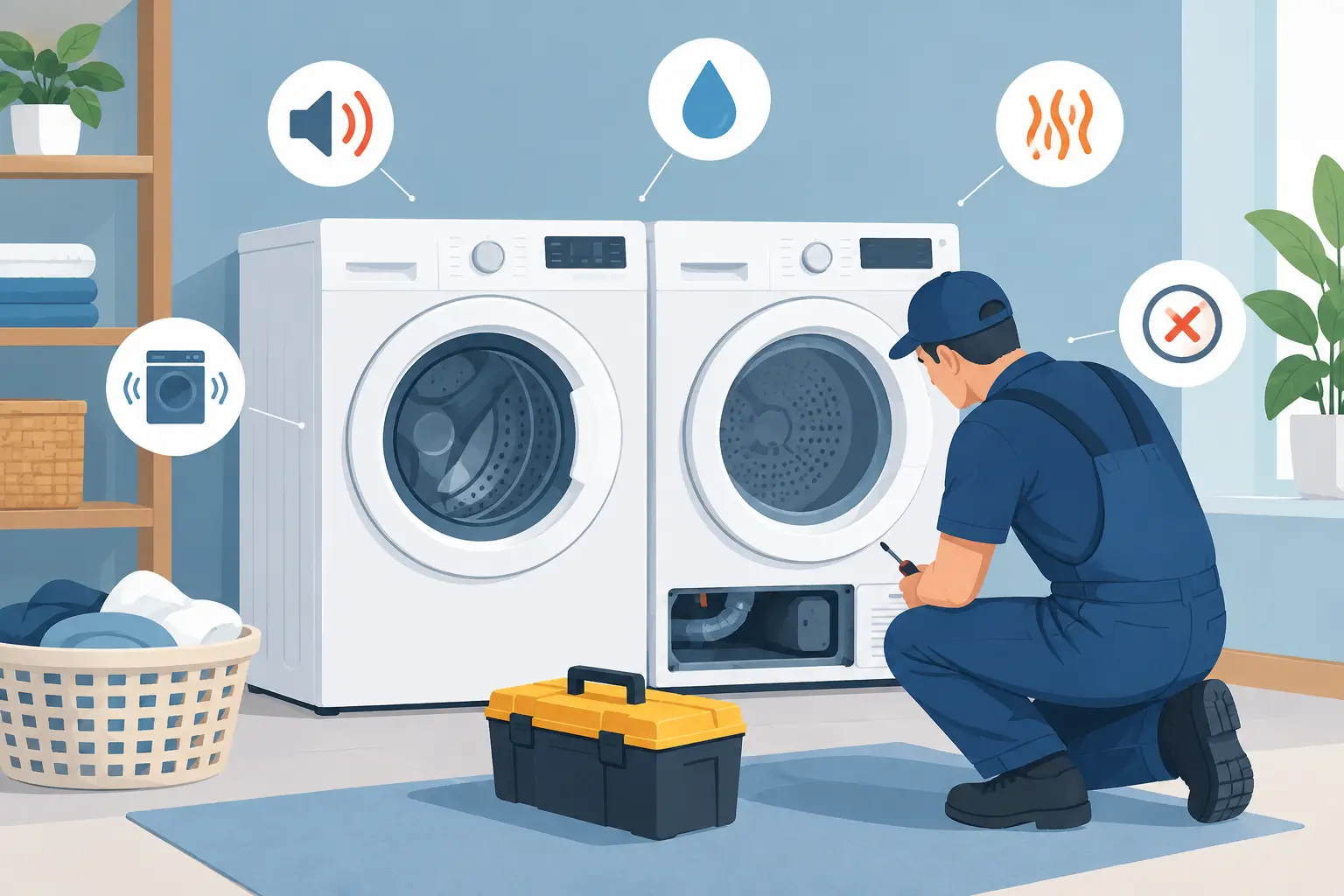
A washer that stops mid-cycle or a dryer that suddenly takes two hours to dry can throw off an entire household. Washer dryer repair is not only about getting laundry done again. It is about protecting your floors, electrical system, clothing, time, and budget before a small problem turns into a larger one.
Some issues have a simple explanation, such as an unlatched door or overloaded drum. Others point to worn parts, blocked airflow, drainage trouble, or electrical faults that should be handled by a trained technician. Knowing the difference helps you make the right call without guessing.
When Washer Dryer Repair Should Not Wait
A machine does not need to be completely dead before it needs professional attention. Unusual behavior is often the earliest warning that a component is failing. Addressing it early can prevent water damage, a ruined load of clothes, or a more expensive repair later.
Call for service promptly if your washer leaks, will not drain, makes grinding or banging noises, smells like it is burning, or repeatedly stops before the cycle finishes. A washer that shakes violently or walks across the floor also needs attention. An unbalanced load can cause temporary vibration, but repeated severe movement may indicate a leveling issue, worn suspension parts, or a problem inside the drum assembly.
For dryers, warning signs include no heat, very low heat, unusually long drying times, a drum that will not turn, squealing or thumping noises, or a hot or burning smell. A dryer that gets hot but leaves clothing damp may have an airflow restriction rather than a failed heating part. That distinction matters because restricted venting can become a fire risk.
If you see smoke, smell burning plastic or electrical wiring, or find standing water near the appliance, stop using it immediately. Turn off the machine if it is safe to do so, disconnect power when possible, and arrange for qualified service. Do not keep restarting the cycle to see whether the problem goes away.
Safe Checks Before You Schedule Service
A few basic checks can rule out simple causes. They should never require taking panels off the appliance, bypassing a safety switch, or handling exposed wiring.
Start by confirming that the washer or dryer has power. Check the outlet, breaker, and power cord for obvious damage. For a washer that will not start, make sure the door or lid closes fully and that the selected cycle has actually begun. If the machine is not filling, verify that the household water valves behind it are open and that the supply hoses are not visibly kinked.
When a washer will not drain, avoid forcing the door open if water is still inside. The appliance may have a blockage, pump issue, or drain-hose problem. Attempting to move a full machine can create a spill and make the situation worse.
With a dryer, clean the lint screen before every load and check that the exterior vent flap can open while the dryer runs. A clogged lint screen, crushed vent hose, or blocked exterior vent can extend dry times and overheat the appliance. Cleaning the screen is routine maintenance. Diagnosing a hidden blockage or internal dryer failure is a repair job.
These checks are useful because they give the technician a clearer starting point. They are not a substitute for service when the problem continues, returns, or involves leaking, heat, noise, or electrical symptoms.
Common Washer Problems and What They May Mean
Washers work with water, weight, motion, and electronic controls in a compact space. A single symptom can have several causes, which is why accurate diagnosis matters.
A washer that will not spin may be responding to an unbalanced load, but it can also have a worn drive component, lid-lock failure, drainage issue, or motor-related problem. If water remains in the tub, the washer may refuse to spin as a safety measure. Replacing a part without identifying the source of the failure can waste money and leave the original issue unresolved.
Leaks deserve particular attention. Water may come from a loose or aging supply hose, a damaged door boot on a front-load washer, a drain connection, a pump, or an internal hose. The location of the water can offer a clue, but it rarely confirms the cause. A leak from the front during a cycle is different from water appearing behind the machine after it drains.
Odors are another frequent concern. A musty smell may be caused by moisture and residue buildup, especially in a front-load washer. Cleaning the gasket and leaving the door ajar between loads can help reduce moisture. But a burning smell, strong electrical odor, or smoky smell is not a cleaning issue. Shut the washer down and have it inspected.
Dryer Problems That Can Affect Safety
Dryers create heat and move air, so repair decisions should take safety seriously. Long dry times are often dismissed as an inconvenience, yet they can signal restricted airflow. The dryer has to run longer, energy use rises, clothing can be exposed to excess heat, and lint may accumulate where it does not belong.
No-heat problems can involve the heating element, thermostat, igniter, gas supply components, thermal fuse, control board, or wiring. The right repair depends on whether the dryer is electric or gas and on what testing reveals. A gas dryer should never be treated as a do-it-yourself experiment. If you smell gas, leave the area, avoid switches and open flames, and contact the appropriate emergency utility resource before scheduling appliance service.
Squealing, scraping, or rhythmic thumping often comes from moving components such as rollers, belts, idler pulleys, or drum supports. Continuing to run the dryer may turn a manageable repair into damage to the drum or motor. It also makes laundry day far less predictable.
Why Professional Diagnosis Protects Your Budget
Online videos can make many repairs appear quick. What they cannot reliably account for is your appliance model, its electrical configuration, the condition of surrounding parts, or whether the visible symptom is the actual failure. A dryer that does not heat may have a failed part, but it may also be shutting down because airflow is unsafe. A washer that does not drain may have a clogged filter or an issue deeper in the drainage system.
Professional washer dryer repair begins with diagnosis, not assumptions. A qualified technician can identify the cause, explain the recommended repair in plain language, and provide the price before work begins. You should know what is being repaired, why it is needed, and what warranty coverage applies.
At Your Appliance Repair, we will not perform repairs without your prior approval. Our technicians arrive on time, work cleanly, use manufacturer-recommended replacement parts when appropriate, and stand behind completed work with labor and parts protection. There are no hidden charges, and free estimates are available with completed repairs.
Repair versus replacement is not always an automatic choice. If an appliance is relatively new and the repair restores dependable performance, repair is often the sensible path. If the unit has repeated failures, major structural damage, or a repair cost that is disproportionate to its age and condition, replacement may deserve consideration. An honest diagnosis gives you the information to decide instead of pushing you toward an unnecessary expense.
Help Your Washer and Dryer Last Longer
A few habits can reduce strain between service visits. Do not overload the washer or dryer, since excess weight affects spinning, tumbling, and wear on mechanical components. Use the right amount of detergent, especially with high-efficiency washers, because excess suds can leave residue and interfere with normal operation.
Keep the washer area dry and inspect supply hoses periodically for cracking, bulging, or corrosion at the connections. Clean the dryer lint screen every load, and do not treat it as the only vent maintenance the dryer needs. The vent path must remain clear enough to move hot, moist air outside efficiently.
Most importantly, pay attention when performance changes. Appliances rarely become noisy, slow, leaky, or unreliable for no reason. Homeowners and property managers across Mountain View, Palo Alto, Sunnyvale, San Jose, and nearby communities can avoid a lot of disruption by arranging service at the first persistent sign of trouble.
A working laundry room should be something you can rely on, not another source of stress. When your washer or dryer starts sending warning signs, choose a repair team that explains the problem clearly, gets approval before the work begins, and stands behind the repair after the job is done.