
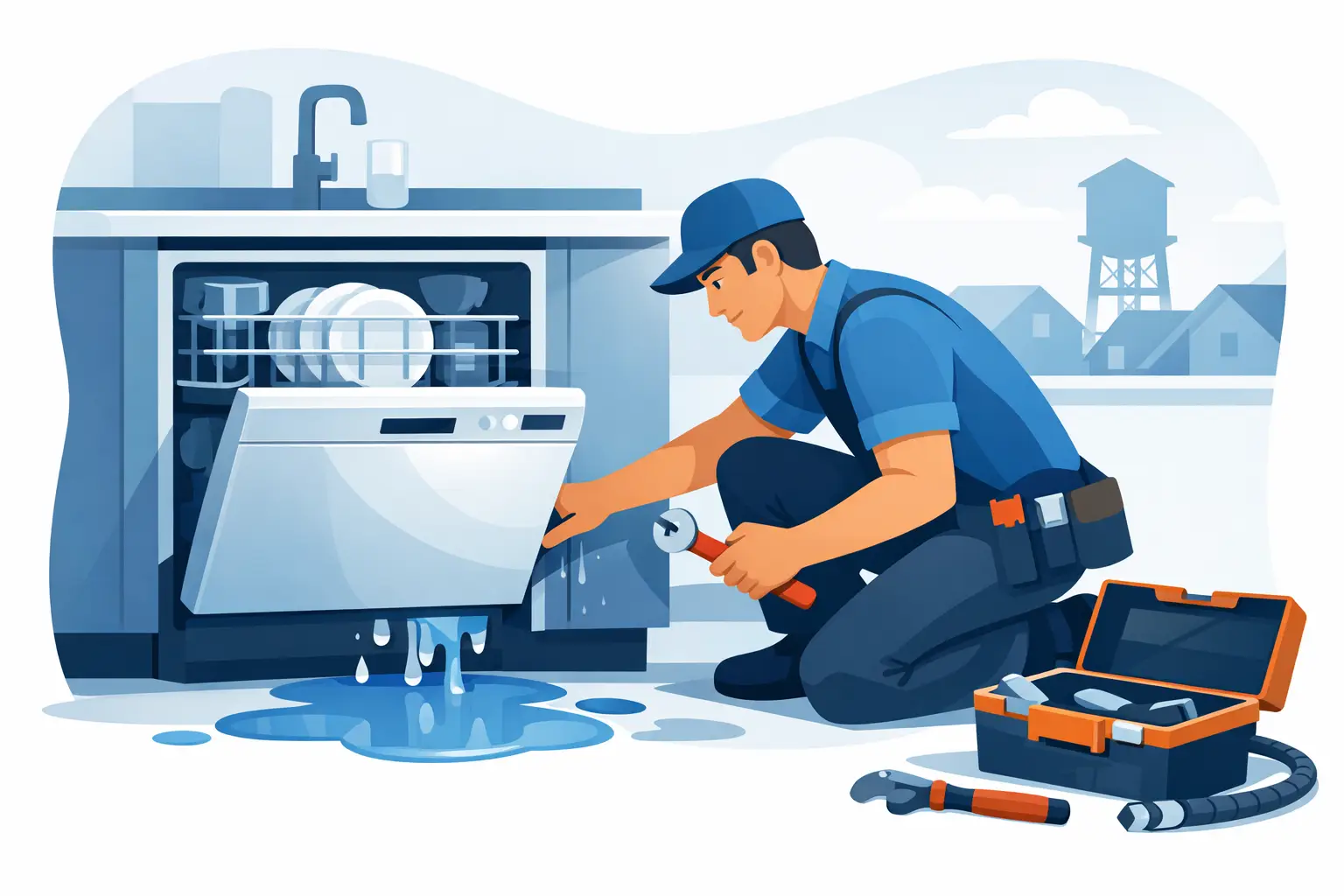
A puddle near the dishwasher can turn an ordinary kitchen cleanup into a concern about damaged flooring, cabinet walls, and hidden moisture. When you need dishwasher leaking repair Hennessey homeowners can depend on, the first priority is stopping the water safely. The next is finding the real source before a small leak becomes a larger repair.
Not every dishwasher leak means the appliance needs to be replaced. A worn door seal, loose hose connection, failed pump seal, or detergent issue can all create water where it does not belong. The location of the water and the point in the wash cycle when it appears give a trained technician useful clues.
What to Do When Your Dishwasher Is Leaking
If water is actively coming from the dishwasher, press Cancel or turn the dishwasher off. If it is safe to reach the outlet, unplug the appliance. For a built-in unit that cannot be unplugged easily, turn off power at the circuit breaker. Then shut off the dishwasher water supply valve, usually located under the kitchen sink.
Use towels to contain standing water, especially near wood flooring, baseboards, and cabinets. Do not continue a wash cycle just to see whether the leak happens again. That can send more water into areas you cannot see and make the original problem harder to diagnose.
If the leak reached an electrical outlet, wiring, or the area beneath the appliance, leave the dishwasher off until it has been inspected. Water and electrical components are not a do-it-yourself combination. A professional can check the appliance for the source of the leak and look for concerns that are easy to miss from the kitchen floor.
Where the Water Appears Can Point to the Cause
A leak at the front of the dishwasher often points to the door area. The door gasket may be dirty, split, flattened, or out of position. A dishwasher that is not level can also allow water to move toward one side of the door. In some cases, a lower spray arm that is cracked or obstructed directs water toward the door with enough force to push it past the seal.
Water beneath the center of the dishwasher may come from the pump, drain hose, water inlet connection, or a seal inside the unit. These parts are largely hidden behind the lower access panel, which is why the exact source is not always obvious. Water can also travel along a hose or frame before reaching the floor, making the puddle appear farther from the actual failure.
A leak under the sink may be related to the dishwasher drain hose or the connection at the disposal or drain line. This can happen during draining rather than washing. If you notice water only after the dishwasher empties, the drain system deserves close attention.
Water on one side of the unit may indicate a loose supply connection, a damaged hose, or water entering through a gap near the door. The timing matters. A leak that starts as soon as the dishwasher fills is different from one that appears halfway through the cycle or only when the drain pump runs.
Common Dishwasher Leak Problems
Dishwashers have several water-handling systems working together: the incoming water line, fill valve, tub, spray arms, pump, drain path, and door seal. A problem in any one of these areas can lead to a leak.
A worn door gasket is one of the more common repairs. Food residue, detergent buildup, and normal aging can keep the gasket from sealing correctly. Cleaning may help if the gasket is intact, but cracking, hardening, or distortion usually calls for replacement.
A damaged spray arm can create a surprisingly dramatic leak. When an arm has a split or is blocked by a utensil, it can send water toward the door rather than distributing it through the tub as designed. The dishwasher may still seem to wash dishes, but water can escape at the lower door corners.
Loose or deteriorated hoses are another frequent cause. The water supply line, drain hose, and internal hoses all need secure connections. A hose may drip only under pressure or only while the drain pump is operating. Tightening a fitting is not always the right answer, since overtightening can damage threads or seals.
A leaking pump or tub seal requires a more careful repair. These components are accessed from below or inside the dishwasher and may require partial disassembly. The best repair depends on the dishwasher model, the condition of the appliance, and whether other parts are showing signs of wear.
Why Detergent Can Cause a Dishwasher to Leak
Sometimes the dishwasher itself is mechanically sound, but excess suds are forcing water out around the door. Hand dish soap should never be used in a dishwasher, even in a small amount. It creates foam that rises beyond the tub’s normal water level and can spill onto the floor.
Using too much dishwasher detergent can also cause excess sudsing, particularly in soft-water areas. Rinse aid should be used according to the dispenser instructions, and the dispenser cap should be secure. If a detergent-related overflow is suspected, stop the cycle, remove as much foam as possible, and avoid running another load until the unit has been checked and cleaned out.
This is one situation where the repair may be simple, but it still pays to watch for repeat leaks. If a dishwasher leaks again with the correct detergent and amount, there may be a seal, spray arm, leveling, or component issue behind it.
When a Dishwasher Leak Needs Professional Repair
A homeowner can safely check for obvious problems such as a fallen utensil blocking the door, visible debris on the gasket, or the use of incorrect soap. Beyond that, dishwasher leak diagnosis can involve live electrical connections, water pressure, sharp cabinet edges, and concealed parts.
Call for service if the leak returns, if water is coming from underneath the dishwasher, or if the appliance will not drain, fill, or complete a cycle. Service is also the right choice when the floor feels soft, cabinet material is swelling, or there is a musty odor after a leak. Those signs can mean moisture has reached areas that need attention quickly.
For renters, notify the property manager or landlord as soon as the leak is discovered and document the water damage. Property managers should address active leaks promptly, particularly in multi-unit buildings where water can affect neighboring spaces or lower levels.
A qualified technician should identify the failed part before recommending a repair. At Your Appliance Repair, the work is explained and approved before repairs begin. There are no hidden charges, and manufacturer-recommended replacement parts are used when they are the right fit for the repair. Labor and parts are guaranteed, with an additional 90-day workmanship warranty at no charge.
What to Expect From Dishwasher Leaking Repair in Hennessey
A proper service visit begins with more than looking at the puddle. The technician will inspect the door seal, spray system, water inlet area, drain path, pump region, and connections while considering when the leak occurs. Depending on the symptom, the dishwasher may need to run through part of a cycle to confirm the source.
Once the cause is identified, you should receive a clear explanation of the recommended repair and the cost before work starts. Some leaks are resolved with a gasket, hose, clamp, or adjustment. Others may require a pump, valve, or internal seal. Whether repair makes sense depends on the appliance’s age, condition, parts availability, and the cost compared with replacement.
Do not ignore a small dishwasher leak because it only happens occasionally. Intermittent drips can still damage flooring and cabinets over time. Turning off the water, protecting the surrounding area, and arranging a clear diagnosis gives your kitchen the best chance of staying dry and your dishwasher the best chance of a lasting repair.