A washer that stops with a tub full of water can bring the whole laundry routine to a halt. For washer not draining repair Hennessey homeowners are searching for, the first priority is preventing a small drainage problem from becoming a flooded floor, damaged clothing, or a more expensive appliance repair.
Do not keep restarting the cycle in hopes that the water will disappear. A washer that cannot drain may be dealing with a simple blockage, but it can also have a failing pump, damaged hose, lid switch issue, or electronic control problem. The right next step depends on what the machine is doing and what you can safely check.
Start With Safety, Not Another Cycle
If water is still inside the washer, turn the machine off and unplug it before inspecting anything. Do not pull the appliance away from the wall while it is running or reach into standing water near an active electrical outlet.
Place towels around the base of the washer to catch drips. If the water level is high, remove some water slowly with a small container or use a wet/dry vacuum if you have one and know how to use it safely. This makes the area safer and gives you a better chance to inspect the visible parts of the drain system without making a bigger mess.
A little patience matters here. Forcing open a locked washer door, prying on panels, or repeatedly canceling and restarting the cycle can create additional damage. When in doubt, stop and arrange for professional service.
Common Reasons a Washer Will Not Drain
A drain failure is not always the same problem. The washer may be unable to move water out, or it may not be receiving the signal to start draining. That distinction is one reason an accurate diagnosis matters.
A kinked or clogged drain hose
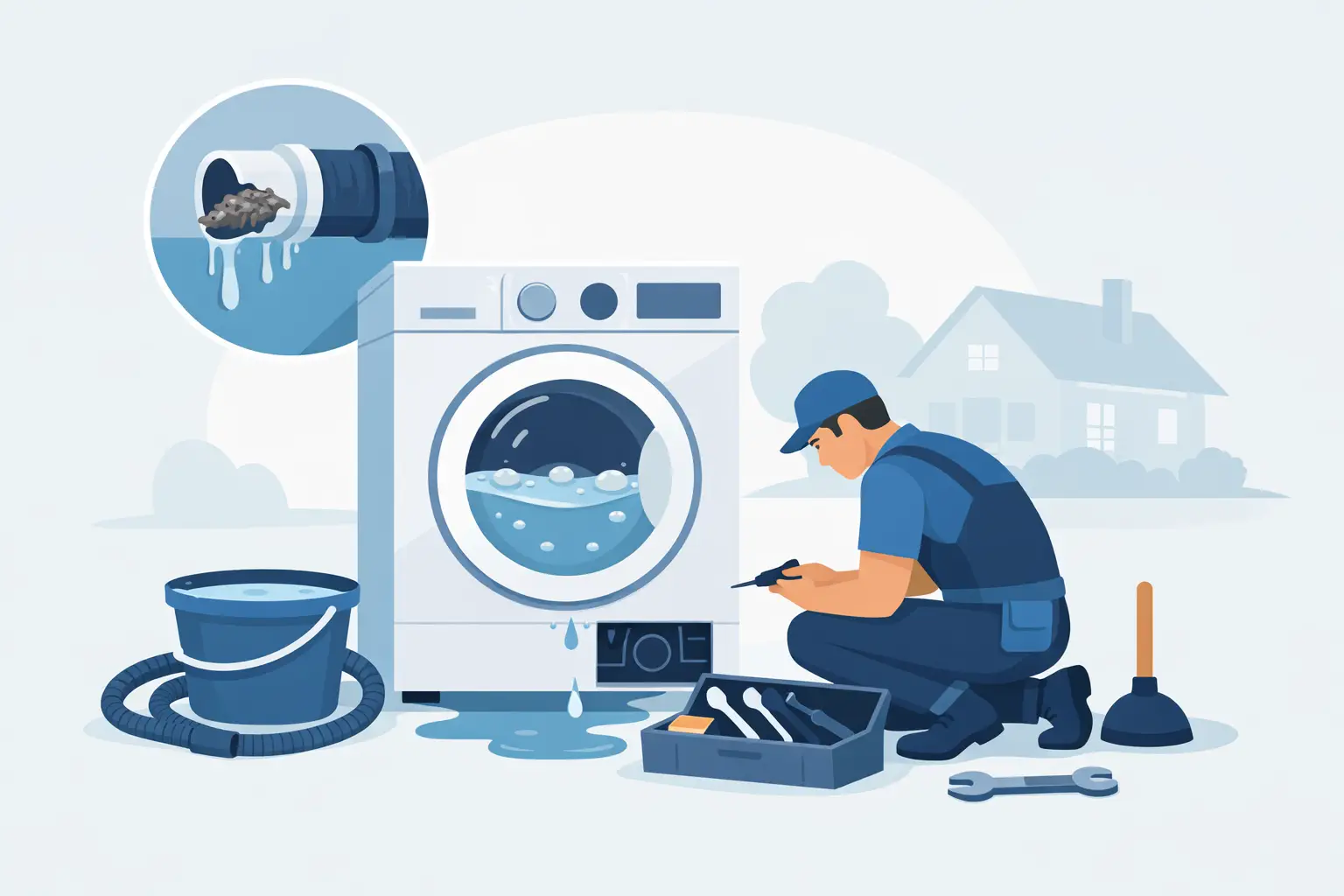
The drain hose carries water from the washer to the household drain. If it is bent sharply behind the machine, crushed against the wall, or blocked by lint and debris, water may drain slowly or not at all. A hose that is pushed too far down the standpipe can also cause drainage trouble.
With the washer unplugged, look behind the appliance for obvious kinks or pinches. Straightening a hose is a reasonable homeowner check. Disconnecting hoses full of water or attempting to clear a deep blockage is usually best left to a trained technician, especially when the washer is in a tight laundry closet.
A blocked pump filter or drain pump
Many front-load washers have a service filter that catches coins, buttons, hairpins, lint, and other small items before they reach the drain pump. When that filter becomes blocked, the washer may stop during the drain portion of the cycle.
Not every washer has a user-accessible filter, and opening one can release a surprising amount of water. The location and process vary by model. If your owner’s manual provides clear instructions and you are prepared to contain the water, it may be worth checking. Otherwise, a service professional can inspect the filter and pump without turning a simple clog into water damage.
A failed drain pump
The pump is responsible for moving water out of the tub. You may hear a humming sound without water draining when the pump is jammed or failing. In other cases, there may be no pump sound at all.
Objects such as socks, coins, and small clothing items can interfere with the pump. Electrical failure, worn pump components, or a damaged impeller can also be the cause. Replacing a drain pump should involve confirming the diagnosis first. Installing a new part without identifying the actual failure can leave you with the same problem and an unnecessary expense.
Too much detergent or the wrong detergent
High-efficiency washers need high-efficiency detergent in the correct amount. Using too much soap, or using regular detergent in an HE machine, can create excessive suds. The washer may struggle to drain, pause, or display an error code because it cannot properly sense the water level.
This is one of the less expensive causes to correct, but it should not be assumed. If the washer has repeatedly failed to drain, has standing water, or makes unusual noises, there may be a mechanical issue as well.
A lid lock, door lock, or control issue
Some washers will not enter the drain-and-spin portion of a cycle if they cannot confirm that the lid or door is securely locked. A faulty lid switch, door latch, wiring problem, or control board can interrupt the cycle even when the drain hose and pump are clear.
These issues can look like a drainage problem from the outside. The machine may stop, flash lights, refuse to spin, or leave clothes soaking wet. Proper testing is needed before replacing parts.
What You Can Check Before Calling for Repair
A few safe observations can help make a service visit more efficient. First, check whether the drain hose is visibly kinked. Next, note whether the washer makes a hum, a grinding sound, or no sound at all when it should drain. Finally, look for an error code and write it down exactly as it appears.
Also consider when the problem began. Did it happen after washing a bulky comforter, a small rug, or a load with items that could have slipped past the drum? Does the washer drain slowly every time, or did it fail suddenly in the middle of a cycle? Those details help narrow down the cause.
Avoid using chemical drain cleaners in the washer or drain hose. They can damage appliance components, create a hazardous splash risk, and make later repairs more difficult. A household plumbing clog may need a different solution than an appliance drainage failure.
When Washer Not Draining Repair in Mountain View CA Calls for a Professional
Call for service when the washer has standing water that will not drain, produces a burning smell, leaks onto the floor, makes loud grinding noises, or repeatedly stops before spinning. Service is also the practical choice when you have already checked for a kinked hose and the problem continues.
A professional diagnosis can separate a drain-pump problem from a plumbing obstruction, faulty latch, pressure switch issue, or control failure. That protects you from paying for parts that do not solve the problem.
For landlords and property managers, prompt repair can be especially important. A non-draining washer affects tenant routines quickly, and water left in the machine can lead to odors, mildew, and potential flooring damage. Clear communication about the diagnosis, approved repair cost, and parts being installed helps everyone make an informed decision.
What a Dependable Repair Visit Should Include
You should know what is wrong before repair work begins. A technician should inspect the washer, explain the likely cause in plain language, and provide the repair recommendation and price for your approval. No repair should begin without your prior approval, and there should be no hidden charges added after the fact.
The quality of the replacement part matters, too. Manufacturer-recommended parts are often the best choice when available because they are designed for the appliance model and its drainage system. The lowest-cost repair is not always the best value if it uses an unsuitable part or skips the testing needed to confirm the washer drains, spins, and completes a cycle properly.
A dependable service company also respects your home. That means arriving on time, protecting the work area, handling the appliance carefully, and leaving the laundry space clean when the job is complete. Repair warranties provide additional peace of mind, particularly for parts such as drain pumps, latches, and electronic components that should be installed and tested correctly.
Help Prevent the Next Drain Problem
Check pockets before every load, especially for coins, tissues, bobby pins, screws, and small children’s items. Use the proper type and amount of detergent, and avoid overloading the washer with heavy blankets or densely packed clothing. Every few months, take a quick look behind the appliance to make sure the drain hose has not become bent or crushed.
If your washer is leaving water behind, do not let the problem sit through several more loads. Fast, careful attention can protect your flooring, preserve your appliance, and get your household back to clean laundry with far less disruption.