A Hennessey summer can turn an air conditioning problem from an inconvenience into a household emergency quickly. When your system is blowing warm air, running nonstop, leaking, or refusing to start, air conditioner repair Hennessey Oklahoma homeowners can depend on should begin with a clear diagnosis – not guesswork, pressure, or surprise charges.
A good repair visit should leave you with answers. You should know what failed, what the repair involves, what it will cost, and whether repairing the equipment makes sense for its age and condition. Most importantly, no work should begin until you approve it.
When Air Conditioner Repair Cannot Wait
Some AC issues can wait until the next available appointment. Others can cause more damage, raise your electric bill, or leave vulnerable family members without safe indoor comfort. If the system will not run at all during hot weather, call for service as soon as possible. The same is true when you smell burning, hear loud grinding or screeching, or see water pooling around indoor equipment.
A burning odor can point to an electrical concern, an overheating motor, or damaged wiring. Turn the system off at the thermostat if it is safe to do so. Do not keep resetting breakers or forcing the unit to run. Repeated attempts can turn a manageable repair into a larger one.
Water near the indoor unit deserves prompt attention, too. In many cases, a clogged condensate drain is the cause. But an ongoing leak can damage flooring, ceilings, insulation, and nearby belongings. If the water is substantial or the ceiling below an attic unit is stained or sagging, shut the system down and request professional help.
Warm air is not always an emergency, but it is never a problem to ignore. A dirty filter, low refrigerant, a failed capacitor, a thermostat issue, or a problem at the outdoor condenser can all produce weak or warm airflow. The right solution depends on the actual cause.
What to Check Before Scheduling Service
There are a few safe checks that may solve a simple problem or give the technician useful information. Start with the thermostat. Confirm it is set to cool, the temperature setting is below the room temperature, and the batteries are working if it uses them. Then check whether the indoor and outdoor system breakers are on.
Next, inspect the air filter. A heavily clogged filter restricts airflow and makes the system work harder. Replace it with the correct size and type if needed. It is also worth looking around the outdoor unit. Grass clippings, leaves, and stored items should be kept away so the equipment can release heat properly.
These checks have limits. Do not remove electrical panels, add refrigerant, or attempt to straighten damaged coil fins without proper tools and training. Air conditioning systems combine high voltage, moving components, pressurized refrigerant, and delicate electronics. A trained technician can test the system safely and identify the failed part instead of replacing components at random.
Common Problems Behind a Failing AC System
Air conditioners rarely fail for just one reason across every home. The symptom matters, but the diagnosis matters more. A system that will not start may have a tripped safety switch, failed capacitor, faulty contactor, thermostat problem, damaged wiring, or a motor issue. Each has a different repair path and cost.
If the AC starts but does not cool well, restricted airflow is often part of the picture. Dirty filters, blocked vents, frozen evaporator coils, blower problems, and dirty outdoor coils can all reduce cooling. Refrigerant loss may also be involved, but refrigerant does not simply get used up. When a system is low, a technician should look for and address the leak rather than only adding refrigerant and hoping for the best.
Short cycling, where the unit turns on and off repeatedly, is another concern. It can stem from thermostat placement, airflow restrictions, electrical components, oversized equipment, or refrigerant and pressure problems. Letting it continue can increase wear on expensive parts.
Unusual sounds also deserve attention. A brief click at startup can be normal. Persistent buzzing, hard banging, metal-on-metal grinding, or high-pitched squealing is not. Make a note of when the sound begins, whether it occurs indoors or outdoors, and whether the system still cools. That information can help speed up diagnosis.
What Dependable Air Conditioner Repair in Hennessey, Oklahoma Looks Like
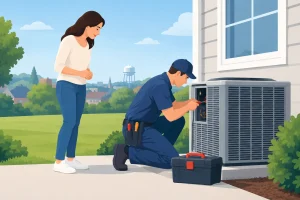
The repair process should be straightforward. A technician should arrive on time, treat your home with care, inspect the system, and explain the findings in plain language. You should not be left trying to interpret technical terms or wondering whether a repair is necessary.
After diagnosis, ask for the proposed repair and total approved price before work begins. A customer-protective service company will not perform repairs without your prior approval. There should be no hidden charges added after the fact for work you did not authorize.
Quality parts matter as much as the initial repair. Manufacturer-recommended replacement parts, when appropriate for the equipment, help protect performance and fit. A low-cost part may look like a savings at first, but it can create repeat failures or incompatibility issues. The goal is not merely to get the air moving again for a day. It is to make a repair that holds up.
Your Appliance Repair approaches HVAC service with that standard in mind: trained, courteous technicians, clean work practices, clear approval before repairs, and protection for completed work. Labor and parts should be guaranteed, and a workmanship warranty provides added confidence that the repair is built to last.
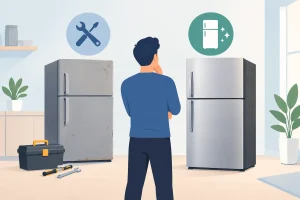
Repair or Replace? Make the Decision With Real Information
A working AC system is usually worth repairing when the problem is isolated, the equipment has been maintained, and the repair cost is reasonable compared with replacement. Capacitors, contactors, drain components, thermostat issues, and some fan or electrical repairs can often be practical fixes.
Replacement becomes a more serious conversation when the system is older, has repeated breakdowns, uses outdated refrigerant, or needs a major component such as a compressor or evaporator coil. Energy efficiency is part of the calculation, but it should not be the only factor. A newer system can lower operating costs, yet replacement has a significant upfront cost that may not make sense for every household or property.
For landlords and property managers, reliability and tenant comfort may weigh heavily in the decision. For a homeowner planning to stay for many years, efficiency and long-term repair history may matter more. Ask for an honest explanation of the trade-offs. A dependable technician should help you understand the options rather than push one answer for every situation.
Prevent the Next Breakdown Where You Can
Not every failure is preventable, but routine attention can reduce avoidable strain. Replace or clean filters on schedule based on your household, pets, allergies, and filter type. Keep supply vents open and clear of furniture. Outdoor units need open space around them, not piles of leaves, lawn debris, or storage items.
Seasonal maintenance can also catch weak components before a hot spell exposes them. During a professional visit, a technician can assess airflow, electrical connections, drainage, refrigerant performance, and the condition of key components. Maintenance does not guarantee a system will never fail, especially as it ages, but it gives you a better chance to address small concerns before comfort is lost.
If your system begins acting differently, write down the details before service. Note the thermostat setting, indoor temperature, sounds, error messages, whether the outdoor unit runs, and when the issue started. Those details can make the service call more efficient and help the technician identify patterns that are not obvious during a short visit.
When the air conditioner stops doing its job, you should not have to gamble on the repair. Choose service that explains the problem clearly, obtains your approval before work begins, and stands behind the parts and workmanship after the cool air returns.